Introduction
A portable AC blowing water is a common and frustrating problem. Instead of enjoying cool, dry air, you’re dealing with a sputtering mess. This usually happens when there’s too much condensation building up inside the unit, and it’s not being properly drained. Ignoring this issue can lead to water damage to your floors and walls, and even promote mold growth. That’s why it’s essential to address it quickly.
Common Causes of Portable AC Blowing Water
Several factors can contribute to your portable AC blowing water. Here are some of the most common:
- High Humidity: The more moisture in the air, the more condensation your AC will produce.
- Incorrect Setup: If the drain hose isn’t properly connected or positioned, water can back up.
- Clogged Drain Hose: Debris, dust, or mineral deposits can block the drain hose, preventing water from escaping.
- Full Water Tank (if applicable): Some models have a water tank that needs to be emptied manually. If it’s full, the AC might start blowing water.
- Dirty Air Filter: A clogged air filter reduces airflow, causing the evaporator coil to get too cold and freeze up. As it melts, the excess water can be blown out.
- Damaged Internal Components: In rare cases, internal parts like the condensate pump (if equipped) or the evaporator coil might be damaged.
- Unit Not Level: If the AC isn’t on a level surface, water might not drain properly.
- Overfilled Drain Pan: Excess condensation that the AC is not able to properly drain.
Symptoms Checklist
Here’s how to identify if your portable AC is blowing water:
- You see water droplets or a stream of water coming from the vent.
- The air coming out of the AC feels damp or humid.
- There’s a musty or moldy smell when the AC is running.
- You hear gurgling or sloshing sounds inside the unit.
- There’s water accumulating around the base of the AC.
How to Fix Portable AC Blowing Water Step-by-Step Guide
Follow these steps to troubleshoot and fix your portable AC:
- Unplug the AC: For safety, always disconnect the AC from the power outlet before working on it.
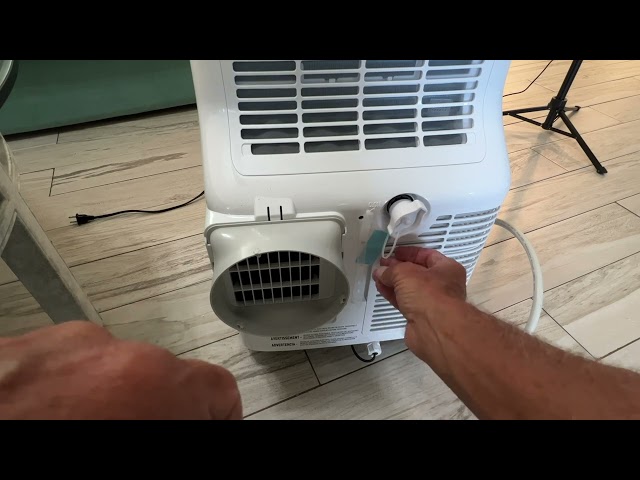
- Check the Drain Hose Connection: Ensure the drain hose is securely attached to the AC unit and the drain outlet.
- Inspect the Drain Hose for Blockages: Disconnect the drain hose and check for any kinks, bends, or clogs. Use a small brush or a stream of water to clear any obstructions.
- Empty the Water Tank (if applicable): If your AC has a water tank, remove it carefully and empty the contents. Clean the tank before reinserting it.
- Clean the Air Filter: Remove the air filter and wash it with mild soap and water. Allow it to dry completely before reinserting it.
- Check the AC’s Position: Make sure the AC is sitting on a level surface. Use a level to confirm.
- Inspect the Condensate Pan: Some units have a visible condensate pan. Check if it’s overfilled and carefully empty it.
- Run the AC in Fan-Only Mode: Run the AC in fan-only mode for a few hours. This can help dry out any excess moisture inside the unit.
- Check the Exhaust Hose: Make sure the exhaust hose (the one that vents hot air outside) is properly installed and not blocked. A blocked exhaust hose can cause the AC to work harder and produce more condensation.
- Consider the Room’s Humidity: If the humidity in your room is extremely high, a dehumidifier might help reduce the moisture load on the AC.
- Inspect the External Vent: Check the window or wall where the exhaust hose is connected to ensure it is sealed properly. Air leaks around the vent can cause the AC to overwork.
- Reset the AC: Some portable AC units can be reset by unplugging them, waiting 15 minutes, and plugging them back in. This can help resolve minor internal errors.
- Clean the Exterior: Wipe down the exterior of the AC to remove any dust or grime that could be affecting its performance.
Fix the Issue Without Buying Parts
Many times, you can resolve a portable AC blowing water without buying any new parts. Regularly cleaning the air filter and drain hose can prevent future problems. Ensure the AC is positioned correctly and the exhaust hose is properly installed. Consider using a dehumidifier in extremely humid environments. A simple reset, as described above, might also do the trick.
When Replacement Might Be Necessary
If you’ve tried all the troubleshooting steps and your AC is still blowing water, there might be a more serious internal problem. A failing condensate pump (if your unit has one) or a damaged evaporator coil could require professional repair or replacement. A new portable AC can range from $200 to $600 USD, depending on the size and features. Condensate pumps cost around $50-$150 USD, and evaporator coil repairs can be more expensive, potentially reaching $200-$400 USD for labor and parts. Before replacing any parts, consider the age and warranty of your unit. It might be more cost-effective to simply replace the entire AC if it’s old or the repair costs are too high.
Safety Warning
- Always unplug the AC from the power outlet before performing any maintenance or repairs.
- Never operate the AC with a damaged power cord or plug.
- Avoid working on electrical components if you’re not comfortable doing so. Call a qualified technician.
- Be careful when handling water to prevent slips and falls.
- Do not submerge the AC unit in water.
Tools You May Need
- Screwdriver (Phillips and flathead)
- Small brush or pipe cleaner
- Water hose
- Mild soap
- Clean cloths
- Level
FAQ
Here are some frequently asked questions about portable ACs blowing water:
- Q: Why is my AC blowing water even after I emptied the tank? A: The tank might not be the only source of the problem. Check the drain hose for clogs and ensure the AC is level.
- Q: How often should I clean the air filter? A: At least every two weeks, or more often if you live in a dusty environment.
- Q: Can I use a regular garden hose as a drain hose? A: It’s best to use the drain hose that came with the AC or a replacement hose designed for that purpose.
- Q: Is it normal for a portable AC to produce some condensation? A: Yes, it’s normal, but excessive condensation is a sign of a problem.
- Q: Can I prevent this issue by running my AC on a lower setting? A: Not necessarily. Lower settings can still produce condensation, especially in humid environments.
- Q: What if my AC doesn’t have a drain hose? A: Some models don’t have a drain hose and rely solely on internal evaporation. If yours doesn’t, ensure the internal evaporation system isn’t blocked or malfunctioning.
Conclusion
Troubleshooting a portable AC blowing water can seem daunting, but by following these steps, you can often fix the problem yourself. Remember to prioritize safety and consult a qualified technician if you’re uncomfortable performing any of these tasks. With a little maintenance and care, you can keep your portable AC running smoothly and efficiently. Try these fixes first before calling a professional, you may be able to resolve the issue yourself and save money.
Youtube Video:
Looking for more useful options?
Check out recommended resources that others find helpful.