Introduction
Is your refrigerator making a rattling noise that mysteriously stops when you open the door? This can be incredibly annoying and, more importantly, might indicate a problem that could lead to bigger issues down the road. The sound likely originates from vibrations somewhere within the fridge, and the slight change in air pressure or component movement when the door opens temporarily eliminates the source. Addressing this issue promptly can prevent food spoilage and expensive repairs. Don’t ignore that rattle!
Common Causes of Fridge Making Rattling Noise Stops When Door Open
- Ice Maker Fan: The fan in your ice maker might be hitting ice buildup or debris.
- Evaporator Fan: This fan circulates cold air within the fridge and can rattle if obstructed or if its motor is failing.
- Condenser Fan: Located at the back of the fridge, this fan cools the compressor. It can rattle due to dust buildup or failing bearings.
- Loose Components: Screws, shelves, or even the drip pan can become loose and vibrate.
- Water Line: A loose water line connected to the ice maker can vibrate against the fridge walls.
- Start Relay: The start relay on the compressor can sometimes rattle as it cycles on and off.
- Dampers: Dampers control airflow. Faulty dampers can vibrate or stick.
- Compressor Mounting: If the compressor mounts are loose or worn, the compressor can vibrate excessively.
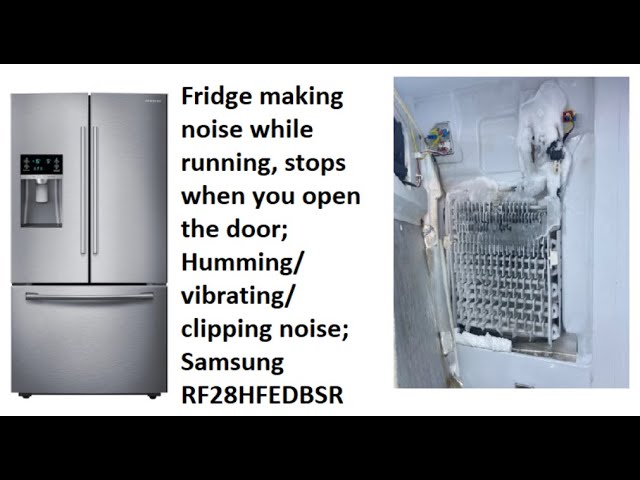
- Frost Buildup: Excessive frost buildup around the evaporator coils can interfere with the fan and cause rattling.
Symptoms Checklist
- Rattling noise stops immediately when the fridge door is opened.
- Noise is more pronounced at certain times (e.g., when the compressor is running).
- Noise seems to be coming from the back, top, or inside of the fridge.
- Ice maker is producing less ice than usual.
- Fridge seems warmer than normal.
- Excessive frost buildup is visible inside the freezer.
How to Fix Fridge Making Rattling Noise Stops When Door Open Step-by-Step Guide
- Unplug the Fridge: Safety first! Always unplug the refrigerator before starting any repairs.
- Locate the Noise: Try to pinpoint the exact location of the rattling. Is it coming from the back, the top, or inside? This will help narrow down the problem.
- Check the Ice Maker: Open the freezer and inspect the ice maker. Look for ice buildup or any loose parts. Try turning the ice maker off and see if the noise stops.
- Inspect the Evaporator Fan: Inside the freezer, you’ll find a panel covering the evaporator fan. Remove the panel (usually held in place by screws) and inspect the fan. Look for ice buildup or obstructions. Manually spin the fan blade to check for smooth movement.
- Check the Condenser Fan: Access the back of the fridge. You’ll see the condenser fan. Clean any dust or debris from the fan blades. Manually spin the fan to check for smooth movement.
- Tighten Loose Components: Check for any loose screws or shelves inside the fridge and freezer. Tighten them securely. Also, ensure the drip pan is properly seated.
- Inspect Water Line: Check the water line connecting to the ice maker. Ensure it’s properly secured and not vibrating against anything. Use zip ties or foam padding to secure it if necessary.
- Listen to the Compressor: The compressor is usually located at the bottom back of the fridge. Listen to it carefully. If you hear a distinct rattling coming from the compressor itself, it might indicate a more serious problem.
- Check the Dampers: Look for dampers (vents) that control airflow between the fridge and freezer. Make sure they’re not stuck or damaged.
- Defrost the Fridge: If you suspect frost buildup is the issue, manually defrost the fridge by unplugging it and leaving the door open for several hours.
- Clean the Coils: Use a vacuum cleaner with a brush attachment to clean the condenser coils at the back of the fridge. Dust buildup can reduce efficiency and contribute to noise.
- Reassemble and Test: After inspecting and cleaning, reassemble all the components and plug the fridge back in. Listen carefully to see if the rattling noise is gone.
Fix the Issue Without Buying Parts
Before rushing out to buy new parts, try these free fixes:
- Reset: Sometimes, simply unplugging the fridge for 15-20 minutes can reset the system and resolve minor issues.
- Cleaning: Thoroughly cleaning the fridge, especially the fans and coils, can remove obstructions and improve performance.
- Inspection: Carefully inspect all components for loose screws, debris, or ice buildup.
- Maintenance Basics: Regularly clean the fridge, defrost as needed, and keep the condenser coils clean to prevent future problems.
When Replacement Might Be Necessary
If you’ve tried all the troubleshooting steps and the rattling noise persists, it might be time to consider replacing a part. Common parts that fail and cause rattling include:
- Evaporator Fan Motor: (Estimated cost: $50-$150)
- Condenser Fan Motor: (Estimated cost: $40-$120)
- Start Relay: (Estimated cost: $20-$50)
- Compressor: (Estimated cost: $300-$800 – professional installation recommended). If the compressor itself is the source of the rattle, replacement is often the best option but should be done by a qualified technician.
Safety Warning
- Always unplug the refrigerator before performing any repairs.
- Be careful when handling electrical components.
- Avoid working on the fridge with wet hands or on a wet floor.
- If you’re uncomfortable with any of these steps, consult a qualified appliance repair technician.
Tools You May Need
- Screwdriver (Phillips and flathead)
- Vacuum cleaner with brush attachment
- Pliers
- Wrench
- Zip ties
- Foam padding
FAQ
- Why does the rattling stop when I open the door? The change in air pressure or slight shift in components when the door opens can temporarily stop the vibration causing the noise.
- Is it safe to ignore the rattling noise? While it might not seem urgent, ignoring the noise can lead to bigger problems, such as food spoilage or compressor failure.
- How often should I clean the condenser coils? Ideally, you should clean the condenser coils every 6 months to maintain optimal efficiency.
- When should I call a professional? If you’re uncomfortable with any of the troubleshooting steps or if the rattling persists after trying these solutions, it’s best to call a qualified appliance repair technician.
Conclusion
A rattling refrigerator can be a nuisance, but with a little troubleshooting, you can often identify and fix the problem yourself. Start with the easy fixes, like cleaning and tightening loose components. If the issue persists, don’t hesitate to seek professional help. Addressing the problem promptly can save you money and prevent further damage to your appliance. Good luck!
Youtube Video:
Looking for more useful options?
Check out recommended resources that others find helpful.