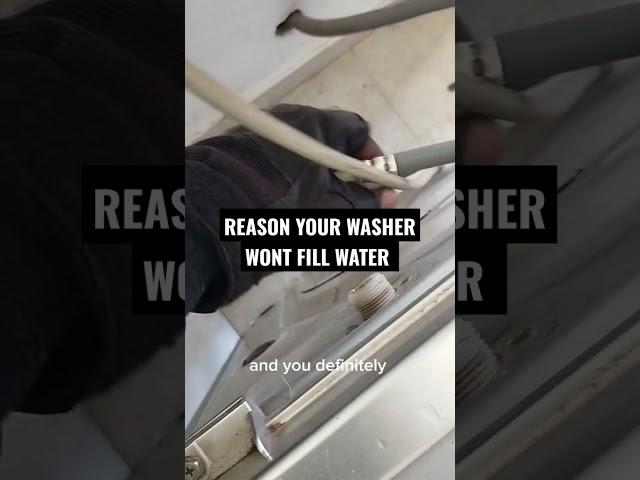
Introduction
A washing machine that won’t fill with water is a frustrating problem. It means laundry day is on hold, and you might be staring at a pile of dirty clothes. The good news is that often, it’s a simple fix you can handle yourself. A washing machine not receiving water could stem from issues with water supply, pressure, or internal components. Addressing this quickly prevents potential motor burnout from running dry, and prevents water damage if a blockage causes overflowing later.
Common Causes of Washing Machine Not Receiving Water
Here are some common reasons why your washing machine isn’t getting water:
- Water Supply Valves Turned Off: Someone might have accidentally turned off the hot or cold water supply valve.
- Kinked or Blocked Water Inlet Hoses: The hoses connecting to the water supply can get kinked, bent, or clogged with sediment.
- Low Water Pressure: Insufficient water pressure from your home’s plumbing can prevent the machine from filling.
- Clogged Inlet Filters: Small filters at the water inlet valve connections can become clogged with debris.
- Faulty Water Inlet Valve: This valve controls the flow of water into the machine, and it can fail electronically or mechanically.
- Defective Lid Switch: The lid switch senses when the lid is closed, and if it’s broken, the machine won’t start the water fill cycle.
- Problem with the Water Level Sensor: The water level sensor detects how much water is in the drum and signals the machine to stop filling. A faulty sensor might not register properly.
- Malfunctioning Timer or Control Board: The timer or electronic control board controls the washing machine functions. A problem here can disrupt the water fill cycle.
- Drain Hose Issues: If the drain hose is positioned too low, the water can siphon out as it enters.
Symptoms Checklist
Look for these signs to help pinpoint the problem:
- The washing machine starts the cycle, but no water enters the drum.
- The washing machine makes a humming noise, but no water is flowing.
- The water trickles in very slowly.
- Error codes related to water fill or water pressure are displayed.
- The washing machine starts filling, but then stops abruptly.
- The washing machine fills, but then immediately drains.
How to Fix Washing Machine Not Receiving Water Step-by-Step Guide
Follow these steps to troubleshoot the problem:
- Check the Water Supply Valves: Make sure both the hot and cold water supply valves behind the washing machine are fully open.
- Inspect the Water Inlet Hoses: Look for any kinks, bends, or damage in the hoses. Straighten any kinks.
- Check Water Pressure: Turn on a faucet in your home. Is the water pressure normal? If not, there might be a plumbing issue.
-
Clean the Inlet Filters:
- Turn off the water supply valves.
- Disconnect the water inlet hoses from the washing machine.
- Locate the small filters inside the inlet valve connections.
- Use pliers to carefully remove the filters.
- Clean the filters under running water with a small brush.
- Reinstall the filters and reconnect the hoses.
- Examine the Lid Switch: Open and close the washing machine lid. Do you hear a click? If not, the lid switch might be faulty. (Testing it would require a multimeter, so visual inspection first is important).
- Inspect the Drain Hose: Make sure the drain hose is properly positioned. It should be high enough to prevent siphoning. Consult your owners manual for the correct height.
- Check the Control Panel Settings: Ensure the correct wash cycle is selected and there are no settings preventing water from entering (like a delayed start).
- Reset the Washing Machine: Unplug the washing machine from the power outlet for 1-2 minutes. Plug it back in and try running a wash cycle. This can sometimes reset the control board.
- Check for Error Codes: Consult your washing machine’s manual for error codes. If there’s a code related to water filling, that could be a clue.
- Listen for Sounds: Start a wash cycle and listen closely. Can you hear the water inlet valve humming or clicking? If not, it might not be getting power or it’s stuck.
Fix the Issue Without Buying Parts
Here are some things you can try before considering replacement parts:
- Reset: Unplug the machine for a few minutes.
- Cleaning: Regularly clean the lint trap and dispenser drawers.
- Recalibration (If Applicable): Some newer machines have a recalibration cycle. Check your manual.
- Inspection Tips: Regularly inspect hoses for wear and tear.
- Maintenance Basics: Avoid overloading the machine and use the correct amount of detergent.
When Replacement Might Be Necessary
If you’ve tried all the troubleshooting steps and the washing machine still isn’t receiving water, a faulty water inlet valve or control board might be the culprit. Replacing the water inlet valve typically costs between $50 and $150 (USD) for the part and labor. Replacing the control board can range from $150 to $400 (USD), depending on the model.
Safety Warning
- Always unplug the washing machine from the power outlet before attempting any repairs.
- Be careful when working with water, and avoid getting water on electrical components.
- Clean up any spills immediately to prevent slips and falls.
- If you are not comfortable performing any of these repairs, contact a qualified appliance repair technician.
Tools You May Need
- Pliers
- Screwdrivers (Phillips and flathead)
- Small brush
- Bucket or towels
- Multimeter (for testing electrical components – optional)
FAQ
Here are some frequently asked questions:
-
Q: Why is my washing machine taking so long to fill?
A: Low water pressure, clogged inlet filters, or a partially blocked hose could be the cause. -
Q: What does it mean when my washing machine is humming but not filling?
A: The water inlet valve is likely getting power but is either stuck or defective. -
Q: Can I use hot water only to wash clothes?
A: It is not recommended. Many washing machines use both hot and cold water for optimal cleaning. -
Q: How often should I clean the inlet filters?
A: It is recommended to clean them every 6 months or as needed if you notice slow filling.
Conclusion
Troubleshooting a washing machine that isn’t receiving water can be a straightforward process. By following these steps, you can often identify and fix the problem yourself, saving time and money. If you’ve exhausted all the DIY options and the issue persists, it’s best to call a qualified appliance repair technician for further assistance.
Youtube Video:
Looking for more useful options?
Check out recommended resources that others find helpful.