Introduction
Is your refrigerator making strange noises that suddenly stop when you open the door? This can be anything from a buzzing or humming sound to a clicking or grinding noise. While it might seem like a minor annoyance, ignoring these sounds can lead to bigger problems down the road. Addressing the issue promptly can save you money on potential repairs and prevent your food from spoiling if the refrigerator’s performance is affected.
Common Causes of fridge makes noise stops when door open
- Fan Issues: The condenser fan and evaporator fan are key components for cooling. When the door is closed, these fans operate. If the fan blades are dirty, damaged, or the motor is failing, they can create noise. Opening the door often stops the fan’s operation temporarily.
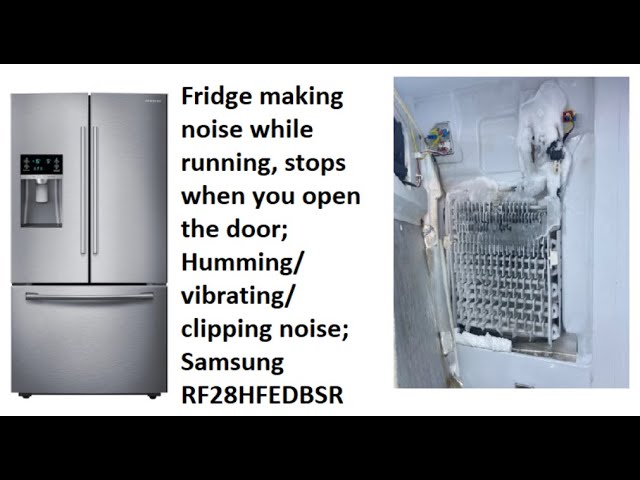
- Ice Buildup: Ice buildup around the evaporator fan can cause it to scrape against the ice, creating noise. Opening the door can sometimes cause a slight thaw, temporarily stopping the noise.
- Compressor Problems: The compressor is the heart of the refrigerator. As it ages, it can become noisier. The vibration from a failing compressor might be more noticeable when the door is closed.
- Defrost Timer Issues: Some refrigerators use a defrost timer to periodically melt ice. A faulty timer can make clicking or buzzing sounds that stop during the defrost cycle (often triggered by opening the door).
- Loose Components: Screws or panels might loosen over time, causing vibrations. When the door is closed, these vibrations can amplify into noticeable noises.
- Water Valve: If your fridge has an ice maker or water dispenser, a faulty water valve can cause buzzing or clicking sounds.
- Start Relay/Overload Protector: These components help start the compressor. A failing relay or protector can cause clicking noises.
Symptoms Checklist
- Noise stops immediately or shortly after opening the fridge door.
- Noise is louder when the door is closed and the fridge is running at full capacity.
- Noise is absent when the compressor is not actively running (e.g., after a cooling cycle).
- Noise is consistent or intermittent but always linked to the fridge being “on”.
- Fridge temperature may be fluctuating or not maintaining a consistent coldness.
- Ice buildup is visible inside the freezer compartment.
How to Fix fridge makes noise stops when door open Step-by-Step Guide
- Unplug the Refrigerator: Always disconnect the power before starting any troubleshooting. This prevents electrical shock.
- Locate the Source of the Noise: Carefully listen to pinpoint where the noise is coming from (back, bottom, inside the freezer, etc.).
- Check the Condenser Fan (Back of Fridge): Remove the access panel (usually held by screws). Inspect the fan blades for dirt, debris, or damage. Clean the blades with a soft brush or vacuum. Make sure nothing is obstructing the fan.
- Inspect the Evaporator Fan (Inside Freezer): Remove the back panel inside the freezer. Look for ice buildup around the fan.
- Defrost the Refrigerator: If you find ice buildup, manually defrost the refrigerator by unplugging it and leaving the door open for several hours (or use a hair dryer on low setting to melt the ice, but be very careful not to melt plastic parts). Place towels to absorb water.
- Clean the Refrigerator Coils: Located at the back or bottom of the fridge, these coils dissipate heat. Use a vacuum cleaner with a brush attachment to remove dust and debris.
- Tighten Loose Components: Check for any loose screws or panels on the back, sides, and bottom of the fridge. Tighten them carefully.
- Level the Refrigerator: An uneven refrigerator can cause vibrations. Use a level to ensure the fridge is level. Adjust the feet as needed.
- Check the Water Line (If Applicable): If your fridge has an ice maker or water dispenser, inspect the water line for kinks or leaks. Ensure it’s properly connected.
- Restart the Refrigerator: Plug the refrigerator back in and monitor it for a few hours. See if the noise has disappeared.
- Observe the Compressor: Listen to the compressor (usually at the bottom rear). If it’s excessively loud or vibrating, it could indicate a problem.
Fix the Issue Without Buying Parts
Before considering replacement parts, try these free methods:
- Full Defrost: Performing a full manual defrost, as described above, can often resolve ice buildup issues causing fan noise.
- Thorough Cleaning: Cleaning the condenser coils and fan blades can significantly reduce noise.
- Refrigerator Reset: Unplugging the refrigerator for 30 minutes can sometimes reset the system and resolve minor issues.
- Inspection for Obstructions: Carefully check for anything touching the refrigerator or blocking fans, which could be causing vibrations.
When Replacement Might Be Necessary
If the noise persists after trying the above steps, and you suspect a failing compressor, fan motor, or defrost timer, replacement might be necessary. Estimated costs for parts and professional installation are:
- Compressor replacement: $400 – $800
- Fan motor replacement: $100 – $300
- Defrost timer replacement: $50 – $150
Safety Warning
- Always unplug the refrigerator before performing any maintenance or repairs.
- Be careful when handling electrical components. If you’re not comfortable working with electricity, consult a qualified technician.
- Avoid using excessive water when cleaning to prevent electrical hazards.
- Be cautious when using a hair dryer to defrost, as excessive heat can damage plastic parts.
Tools You May Need
- Screwdrivers (Phillips and flathead)
- Vacuum cleaner with brush attachment
- Soft brush
- Level
- Towels
- Hair dryer (optional, for defrosting)
FAQ
- Q: Why does the noise stop when I open the door? A: Opening the door often interrupts the fan operation, which is a common source of noise.
- Q: Is it safe to continue using the refrigerator if it’s making noise? A: It’s best to address the noise promptly to prevent further damage or food spoilage.
- Q: How often should I clean the refrigerator coils? A: It’s recommended to clean the coils every 6-12 months.
- Q: Can I use any lubricant on the fan motors? A: No, using the wrong lubricant can damage the motor. Consult a technician if lubrication is needed.
Conclusion
Troubleshooting a noisy refrigerator can seem daunting, but by following these steps, you can often identify and fix the problem yourself. Remember to prioritize safety and take your time. If you’ve tried these solutions and the noise persists, it might be time to consult a qualified appliance repair technician. Don’t hesitate to seek professional help to avoid further complications.
Youtube Video:
Looking for more useful options?
Check out recommended resources that others find helpful.