Introduction
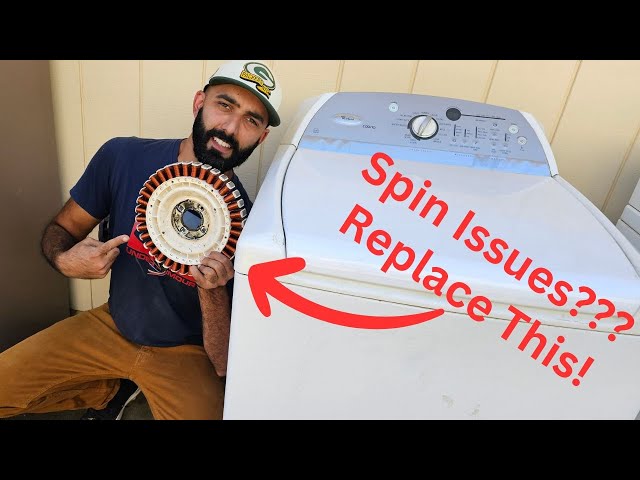
Discovering your Whirlpool Cabrio washer isn’t spinning at the end of a cycle can be frustrating. This means your clothes are soaking wet, and you might have to wring them out by hand! A washer that doesn’t spin can stem from several common issues. Addressing this quickly is essential to prevent mold and mildew growth inside your washer and to avoid potential damage to your laundry room floor. Don’t panic; often, the problem is something you can fix yourself.
Common Causes of Whirlpool Cabrio Not Spinning
Several issues can prevent your Whirlpool Cabrio from spinning correctly:
- Overloading: Too many clothes in the washer can prevent the drum from spinning.
- Unbalanced Load: Clothes clumped on one side can throw off the balance and stop the spin cycle.
- Lid Switch Malfunction: The washer won’t spin if the lid switch isn’t properly engaged.
- Drive Belt Issues: A worn or broken drive belt can prevent the motor’s power from reaching the drum.
- Motor Coupling Problems: The motor coupling connects the motor to the transmission. If it’s broken, the washer won’t spin.
- Drainage Problems: If the washer can’t drain the water, it won’t spin.
- Control Board Issues: A faulty control board can disrupt the spin cycle.
- Blocked Drain Pump: Objects like socks or small items can clog the drain pump.
Symptoms Checklist
Use this checklist to accurately identify the issue:
- The washer fills with water but doesn’t spin during the wash or rinse cycle.
- The washer makes a humming or buzzing noise but the drum doesn’t move.
- The washer stops mid-cycle and displays an error code.
- The clothes are soaking wet at the end of the cycle.
- The washer drains slowly or not at all.
How to Fix Whirlpool Cabrio Not Spinning Step-by-Step Guide
Follow these steps to troubleshoot the issue:
- Check for Overloading: Remove some clothes to reduce the load size. A good rule of thumb is to leave about a hand’s width of space at the top of the drum.
- Rearrange the Load: Make sure the clothes are evenly distributed in the drum. Untangle any clumps of clothing.
- Check the Lid Switch: Open and close the lid firmly. Listen for a clicking sound. If you don’t hear it, the switch might be faulty.
- Look for Error Codes: Check the washer’s display panel for any error codes. Consult your user manual to understand the code and its solution.
- Ensure Proper Drainage: Make sure the drain hose isn’t kinked or blocked. Remove the hose from the drainpipe and check for obstructions.
- Inspect the Drain Pump Filter: Locate the drain pump (usually at the bottom front of the washer behind an access panel). Remove the filter and clean out any debris.
- Run a Calibration Cycle: Some Whirlpool Cabrio models have a calibration cycle. Consult your user manual for instructions on how to start it.
- Check the Drive Belt (Advanced): Unplug the washer. Access the drive belt (usually by removing the back panel). Check for wear, cracks, or breakage.
- Check the Motor Coupling (Advanced): While you have access to the back, visually inspect the motor coupling (connects motor to transmission). Look for broken or crumbling pieces.
- Listen for Unusual Noises: During a spin cycle (even if it’s not spinning well), listen closely for any grinding, squealing, or rattling sounds, which might indicate a worn bearing or other mechanical issue.
- Check the Leveling Legs: Make sure the washer is level. Use a level to check, and adjust the leveling legs as needed. An unlevel washer can vibrate excessively and cause spin problems.
- Try a Different Wash Cycle: Select a different wash cycle with a faster spin speed to see if the issue persists.
Fix the Issue Without Buying Parts
Before considering replacement parts, try these free methods:
- Reset the Washer: Unplug the washer for 1-2 minutes, then plug it back in. This can sometimes clear minor electronic glitches.
- Clean the Washer: Run a washer cleaning cycle with a washing machine cleaner or a cup of white vinegar. This can remove buildup that might be affecting performance.
- Recalibrate the Washer: If your model supports it, recalibrate the washer according to the owner’s manual.
- Inspect the Drain Hose: Ensure the drain hose is not kinked, clogged or inserted too far into the drain pipe.
- Maintain Proper Loading: Always load the washer with the correct amount of clothes and distribute them evenly.
When Replacement Might Be Necessary
If you’ve tried all the troubleshooting steps and your washer still won’t spin, a replacement part might be necessary. Common culprits include:
- Lid Switch: $20$50
- Drive Belt: $15$40
- Motor Coupling: $10$30
- Drain Pump: $50$150
- Control Board: $100$300 (consider professional repair if this is the case)
Safety Warning
Follow these safety precautions:
- Always unplug the washer before performing any repairs or inspections.
- Avoid working on the washer with wet hands or on a wet floor.
- Be careful when handling sharp tools.
- If you are not comfortable performing a repair, contact a qualified appliance technician.
Tools You May Need
Here are some tools that might be useful:
- Screwdrivers (Phillips and flathead)
- Pliers
- Wrench
- Multimeter (for testing electrical components advanced)
- Level
- Gloves
FAQ
Here are some frequently asked questions:
- Q: Why is my Whirlpool Cabrio washer making a humming noise but not spinning? A: This could indicate a problem with the motor, motor coupling, or drain pump. Inspect these components for damage or obstructions.
- Q: How do I know if my lid switch is broken? A: If the washer doesn’t start or spin when the lid is closed, and you don’t hear a clicking sound when the lid is engaged, the lid switch might be faulty.
- Q: Can overloading the washer cause it not to spin? A: Yes, overloading can prevent the drum from spinning due to excessive weight or imbalance.
- Q: How often should I clean my washing machine? A: It’s recommended to clean your washing machine at least once a month to prevent buildup and maintain optimal performance.
Conclusion
Troubleshooting a Whirlpool Cabrio that won’t spin can seem daunting, but by following these steps, you can often identify and resolve the issue yourself. Remember to prioritize safety and take your time. If you’ve exhausted all the DIY options and the problem persists, it might be time to call in a qualified appliance technician. Don’t give up; you’ve got this!
Youtube Video:
Looking for more useful options?
Check out recommended resources that others find helpful.