Introduction
Is your ecobee thermostat set to cool, but your home feels more like a sauna? An air conditioner that isn’t cooling properly is a common and frustrating problem, especially during hot summer months. This issue could be a simple fix, or it could point to a more significant problem with your AC system. Addressing this quickly is essential, not only for your comfort, but also to prevent further damage to your AC unit and higher energy bills.
Common Causes of ecobee air conditioner not cooling
Several factors can contribute to your ecobee not cooling properly. Here are some of the most common:
- Thermostat Settings: The ecobee might be in “Fan Only” mode or set to a temperature that’s too high.
- Dirty Air Filter: A clogged air filter restricts airflow, making your AC work harder and less efficiently.
- Frozen Evaporator Coil: Restricted airflow or low refrigerant can cause the evaporator coil (inside the indoor unit) to freeze.
- Dirty Condenser Coil: The condenser coil (outside unit) releases heat. If it’s dirty, it can’t do its job effectively.
- Blocked Condenser Unit: Obstructions around the outdoor unit, such as plants or debris, can restrict airflow.
- Low Refrigerant: A refrigerant leak will reduce your AC’s cooling capacity.
- Tripped Circuit Breaker: The breaker powering your AC unit may have tripped, cutting off power.
- Ductwork Issues: Leaky or uninsulated ducts can lose cool air before it reaches your rooms.
- Ecobee Configuration Issues: Incorrect wiring or configuration settings may prevent the ecobee from properly communicating with your AC system.
- Compressor Problems: The compressor is the heart of the AC. If it fails, the AC won’t cool. This is a more serious issue.
Symptoms Checklist
Use this checklist to accurately pinpoint the problem:
- The ecobee thermostat is set to “Cool” and the desired temperature is lower than the current room temperature.
- The AC unit is running, but the air coming from the vents is not cold.
- You hear unusual noises coming from the indoor or outdoor unit.
- Ice buildup is visible on the copper lines of the indoor AC unit.
- Your energy bills have suddenly increased.
- The outdoor unit is not running at all.
- The fan on the outdoor unit is not spinning.
- The ecobee reports error codes or connectivity issues.
How to Fix ecobee air conditioner not cooling Step-by-Step Guide
Follow these steps to troubleshoot your ecobee and AC unit:
- Verify Thermostat Settings: Ensure the ecobee is set to “Cool” and the desired temperature is at least a few degrees lower than the current room temperature. Check for any schedule overrides or “Hold” settings that might be affecting the cooling.
- Check the Air Filter: Locate your furnace or air handler (usually in the basement or attic). Open the filter compartment and inspect the air filter. If it’s dirty, replace it with a new one.
- Inspect the Outdoor Unit: Visually inspect the condenser unit outside. Make sure there are no obstructions blocking airflow (leaves, branches, etc.). Clear away any debris.
- Check the Circuit Breaker: Go to your electrical panel and locate the breaker for your AC unit (it’s usually labeled). Make sure it’s in the “On” position. If it’s tripped, reset it. If it trips again immediately, call a qualified electrician.
- Examine the Indoor Unit: Look for ice buildup on the copper lines connected to the indoor unit. If you see ice, turn off the AC and run only the fan to thaw the coil. This could take several hours.
- Clean the Condenser Coils: With the power OFF, use a garden hose to gently spray the condenser coils from the inside out. Avoid using a high-pressure sprayer, as it can damage the fins.
- Restart the AC: After cleaning or thawing the coils, turn the power back on and wait to see if the AC starts cooling properly.
- Check Ecobee Wiring: If you recently installed your ecobee, double-check the wiring connections to ensure they match the manufacturer’s instructions. Loose or incorrect wiring can cause communication problems.
- Reboot the Ecobee: Sometimes a simple reboot can resolve software glitches. Restart the ecobee by navigating through the menu or by temporarily removing it from the wall.
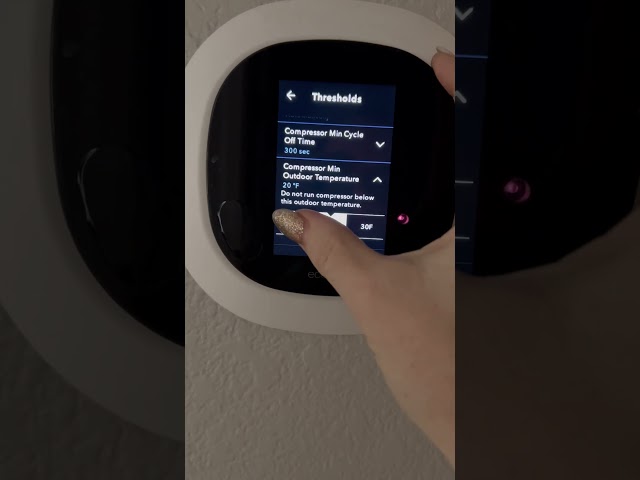
- Verify Ecobee Settings: Check your ecobee settings to ensure the minimum cooling stage time is not too long. A longer time will delay the AC from starting. This setting is often found under the “Equipment Settings” of the thermostat.
- Check for Leaks in Ductwork: Inspect visible ductwork for any obvious leaks or disconnections. Seal any leaks with duct tape.
- Monitor Performance: Let the AC run for several hours and monitor its performance. If the air is still not cooling properly, proceed to the next steps.
- Consult Ecobee Support: Review Ecobee’s online support and troubleshooting articles. You may find specific solutions for your ecobee model.
Fix the Issue Without Buying Parts
Many AC problems can be resolved without immediately resorting to buying new parts. Here are some free methods to try:
- Thermostat Reset: Reset your ecobee to factory settings and reconfigure it. This clears potential software conflicts.
- Thorough Cleaning: Regularly clean air filters, condenser coils, and the area around the outdoor unit.
- Recalibration: Some ecobee models have calibration settings. Use these to ensure accurate temperature readings.
- Visual Inspection: Regularly inspect all components for signs of damage, wear, or obstructions.
- Preventive Maintenance: Schedule annual AC maintenance to keep your system running efficiently and prevent major issues.
When Replacement Might Be Necessary
If you’ve tried all the troubleshooting steps and your AC is still not cooling, a part might need replacing. Common parts that fail include the capacitor, fan motor, or compressor. The cost to replace these parts can range from $150 for a capacitor to $1500+ for a compressor. However, a failing compressor or refrigerant leak often signals that replacing the entire unit is a better long-term investment, which could cost $3,000-$7,000 depending on the size and efficiency of the new system.
Safety Warning
- Always turn off the power to the AC unit at the circuit breaker before performing any maintenance or repairs.
- Never touch electrical components with wet hands.
- Be careful when working around the outdoor unit, as the metal fins can be sharp.
- If you’re uncomfortable working with electricity or refrigerant, call a qualified HVAC technician.
- Do not attempt to repair the refrigerant lines. Refrigerant is a hazardous substance.
Tools You May Need
- Screwdriver (Phillips and flathead)
- Wrench set
- Garden hose
- Air filter
- Duct tape
- Multimeter (optional, for testing electrical components)
FAQ
Here are some frequently asked questions about AC problems:
- Q: Why is my AC blowing warm air even though the thermostat is set to cool? A: This could be due to a tripped breaker, dirty air filter, frozen evaporator coil, or low refrigerant.
- Q: How often should I change my air filter? A: It depends on the type of filter and the air quality in your home, but generally, you should change it every 1-3 months.
- Q: What does it mean if my AC is making a loud humming noise? A: A humming noise could indicate a problem with the capacitor, fan motor, or compressor.
- Q: How do I know if my AC is low on refrigerant? A: Signs of low refrigerant include weak airflow, warm air, and ice buildup on the copper lines.
- Q: How long should my AC unit last? A: With proper maintenance, a well-maintained AC unit can last 10-15 years.
- Q: My ecobee says “no power to R wire.” What does that mean? A: This suggests a problem with the power supply to the thermostat. Check wiring connections and consult an electrician if needed.
Conclusion
Don’t sweat it! Troubleshooting your ecobee and AC unit can seem daunting, but by following these steps, you can often resolve the issue yourself. Remember to prioritize safety and take it one step at a time. If you’ve exhausted these options and your AC is still not cooling, it’s time to call a qualified HVAC technician for professional assistance. A little DIY can save you money and keep you cool during the hottest days!
Youtube Video:
Looking for more useful options?
Check out recommended resources that others find helpful.