Introduction
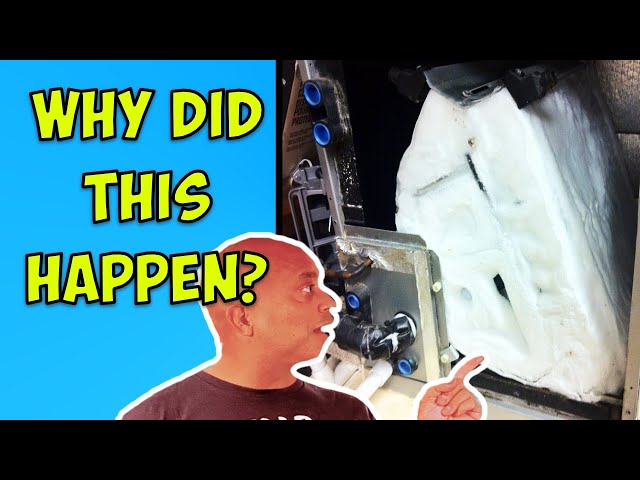
A frozen air handler is a common problem that occurs when the evaporator coil inside your air handler freezes over with ice. This ice blocks airflow, causing your AC to stop cooling effectively. This issue often arises during hot weather when your AC is working overtime. Addressing a frozen air handler promptly is crucial to prevent potential damage to your system, such as a burnt-out compressor, and to restore comfortable cooling in your home.
Common Causes of Air Handler Frozen
Here are some common reasons why your air handler might be freezing up:
- Low Refrigerant: Insufficient refrigerant reduces coil temperature, causing moisture to freeze.
- Dirty Air Filter: A clogged filter restricts airflow across the coil, leading to ice buildup.
- Restricted Airflow: Blocked vents or closed registers limit airflow, causing the coil to overcool and freeze.
- Dirty Evaporator Coil: Dust and debris act as insulation, trapping cold air and promoting freezing.
- Faulty Blower Motor: A weak or failing blower motor reduces airflow over the coil.
- Leaky Ductwork: Air leaks reduce system efficiency and can cause the coil to freeze.
- Thermostat Issues: Incorrect thermostat settings or a malfunctioning thermostat can cause continuous AC operation and freezing.
- Outdoor Temperature Too Low: Running your AC when it’s too cold outside (below 60F) can cause the coil to freeze.
Symptoms Checklist
Look for these signs to determine if your air handler is frozen:
- No cool air coming from vents.
- Visible ice buildup on the air handler or copper lines.
- Weak airflow from vents.
- Water leaks around the air handler (after thawing).
- AC runs constantly without cooling the house.
- Strange noises coming from the air handler.
How to Fix Air Handler Frozen Step-by-Step Guide
Follow these steps to troubleshoot and fix a frozen air handler:
- Turn off the AC: Immediately turn off your AC system at the thermostat to stop further ice buildup and prevent damage. Set the fan to “ON” to help melt the ice.
- Inspect the Air Filter: Locate the air filter in your air handler or return vent. Remove it and check for dirt and debris.
- Replace the Air Filter: If the filter is dirty, replace it with a clean, new filter of the correct size. A clean filter allows for proper airflow.
- Check for Blocked Vents: Make sure all supply and return vents are open and unobstructed by furniture, curtains, or rugs.
- Inspect the Evaporator Coil: Carefully inspect the evaporator coil (usually inside the air handler). Look for visible ice buildup. If you see ice, proceed to the next step.
- Thaw the Ice: Allow the ice to melt completely. This can take several hours. You can speed up the process by using a fan to blow air over the coil. You can also use a hair dryer set to low heat, but be very careful not to damage any components.
- Check for Leaks: While the unit is thawing, check for any signs of water leaks around the air handler. Place towels to catch any dripping water.
- Run the Fan Only: Once the ice is completely melted, run the fan only (set the thermostat to “FAN ON” and turn off cooling) for several hours to dry out the coil.
- Check for Refrigerant Leaks (If Possible): Visually inspect the copper lines connected to the air handler for signs of leaks (oily residue). This is best left to a professional.
- Restart the AC: After the coil is completely dry, turn the AC back on. Monitor the system to ensure it’s cooling properly and the coil doesn’t freeze again.
- Monitor Airflow: Ensure you have strong airflow coming from all vents. Weak airflow can indicate a continuing problem.
- Check Thermostat Settings: Make sure your thermostat is set to a reasonable temperature (72-78F) and is not set too low, which can cause overcooling.
- Repeat If Necessary: If the problem recurs quickly, it’s likely a more serious issue requiring professional attention.
Fix the Issue Without Buying Parts
Many frozen air handler problems can be resolved without purchasing new parts:
- Air Filter Cleaning or Replacement: Regularly replace your air filter every 1-3 months.
- Clear Air Vents: Ensure vents are unblocked and open.
- Thermostat Adjustment: Adjust your thermostat to a higher temperature to reduce AC strain.
- Coil Cleaning: Keep your evaporator coil clean by using a vacuum cleaner with a brush attachment to remove surface dust.
- Regular System Inspection: Schedule routine HVAC inspections to identify and address potential issues early.
When Replacement Might Be Necessary
While most frozen air handlers can be fixed, certain situations might require component replacement:
- Blower Motor Failure: If the blower motor is completely non-functional, it needs replacement. A new blower motor can cost $200-$600.
- Refrigerant Leak: Major refrigerant leaks might require replacing components like the evaporator coil or condenser. This can cost $500-$2000 depending on the severity and parts needed.
- Compressor Failure: If the compressor is damaged due to prolonged freezing, it might need replacement, which is a significant expense ($800-$2500).
Safety Warning
- Turn off Power: Always turn off the power to the AC unit at the breaker box before performing any maintenance.
- Avoid Water and Electricity: Never work on electrical components with wet hands or in damp conditions.
- Professional Help: If you are uncomfortable with any step, consult a qualified HVAC technician.
Tools You May Need
- Screwdrivers (Phillips and flathead)
- New Air Filter
- Vacuum Cleaner with Brush Attachment
- Towels
- Hair Dryer (optional, for thawing)
FAQ
Here are some frequently asked questions:
-
Q: How often should I change my air filter?
A: Every 1-3 months, depending on usage and air quality. -
Q: Can a dirty air filter really cause my AC to freeze?
A: Yes, a dirty filter restricts airflow, causing the coil to freeze. -
Q: How long does it take for an air handler to thaw?
A: It can take several hours, depending on the severity of the ice buildup. -
Q: What if the problem keeps happening even after I defrost the coil?
A: You likely have a more serious problem, such as a refrigerant leak or a faulty component, and you should call a professional.
Conclusion
Troubleshooting a frozen air handler can often be managed with simple steps. Remember to prioritize safety and start with easy fixes like replacing the air filter and ensuring proper airflow. If the problem persists, don’t hesitate to contact a qualified HVAC technician. Often, you can prevent further damage and save money by addressing the issue promptly.
Youtube Video:
Looking for more useful options?
Check out recommended resources that others find helpful.