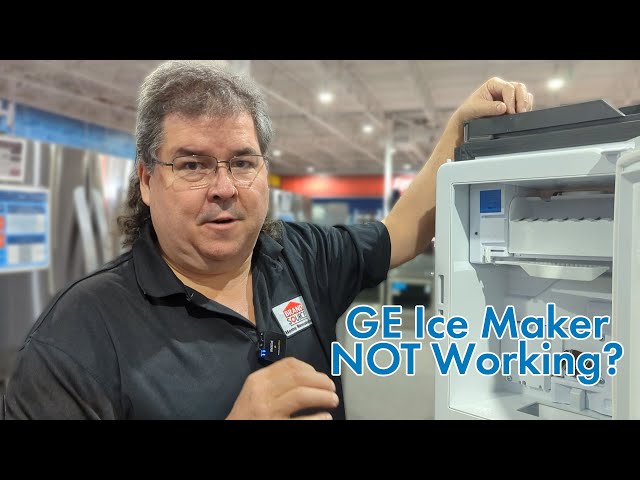
Introduction
Discovering your GE ice maker isn’t making ice can be frustrating, especially during warmer months. This issue can stem from various factors, affecting your ability to enjoy chilled drinks or easily prepare for gatherings. Addressing this promptly prevents food spoilage due to inconsistent temperatures and ensures you have ice readily available when needed.
Common Causes of My GE Ice Maker is Not Making Ice
Here are some common reasons why your GE ice maker might be on the fritz:
- The ice maker is turned off: Believe it or not, sometimes the simplest explanation is the correct one!
- Water supply issue: A kinked or frozen water line restricts water flow to the ice maker.
- Water filter is clogged: A dirty water filter reduces water pressure, hindering ice production.
- Freezer temperature is too high: The freezer needs to be cold enough (around 0-5F) for the ice maker to function correctly.
- Ice blockage: Ice can clump together, preventing the ice maker from ejecting new ice.
- Faulty water inlet valve: This valve controls the flow of water to the ice maker; if it fails, no water, no ice.
- Ice maker mold issue: If your ice maker mold is damaged, the ice may be melting to fast and causing the ice maker to think there are no ice.
- Defective ice maker assembly: In rare cases, the entire ice maker module might be malfunctioning.
Symptoms Checklist
Use this checklist to pinpoint the problem:
- No ice production at all.
- Small or misshapen ice cubes.
- Slow ice production.
- Water leaking from the ice maker area.
- Unusual noises coming from the ice maker.
- Water dispenser not working (if connected to the same water line).
How to Fix My GE Ice Maker is Not Making Ice Step-by-Step Guide
- Check the power switch: Ensure the ice maker is switched “on.” It’s usually a wire bail arm or a switch on the unit.
- Verify the freezer temperature: The ideal freezer temperature is between 0-5F (-18 to -15C). Adjust the temperature setting if needed.
- Inspect the water line: Look for kinks or bends in the water line behind the refrigerator. Straighten any kinks.
- Check the water filter: Replace the water filter every 6 months or as recommended by the manufacturer. A clogged filter reduces water flow.
- Listen for the water inlet valve: After replacing the filter, listen for a buzzing sound as the ice maker cycles. This indicates the valve is opening and filling the ice maker. If you hear nothing, the valve may be faulty.
- Clear ice blockage: Manually remove any ice clumps or blockage in the ice maker tray. You can use a plastic utensil to avoid damaging the unit.
- Perform a reset: Many GE ice makers have a reset button (usually red or black). Press and hold it for a few seconds. Alternatively, unplug the refrigerator for 5 minutes and then plug it back in.
- Inspect the ice maker arm: Make sure the ice maker arm is not stuck in the “up” (off) position. Gently lower it if necessary.
- Test the water pressure: Ensure sufficient water pressure to your refrigerator. Low water pressure can prevent the ice maker from filling properly.
- Check for frozen water lines: If you suspect a frozen water line, try thawing it with a hairdryer (on low heat) or by leaving the refrigerator unplugged for a few hours.
- Clean the Ice Maker mold: With time, ice maker molds can get damaged or dirty. Take it out and give it a good clean. Make sure the mold is properly aligned when you replace it.
Fix the Issue Without Buying Parts
Before considering replacement parts, try these cost-free solutions:
- Reset the ice maker: As mentioned earlier, the reset button can often resolve minor glitches.
- Clean the ice maker: Regularly cleaning the ice maker prevents ice blockage and ensures optimal performance.
- Inspect water lines: Visually inspect water lines for any visible kinks, damage or obstructions.
- Regular maintenance: Replace the water filter as per the manufacturer’s recommendations to maintain water flow and ice quality.
When Replacement Might Be Necessary
If troubleshooting steps don’t resolve the issue, these parts might need replacing:
- Water inlet valve: If the valve is not opening or closing properly, it needs replacement (Estimated cost: $30-$70).
- Ice maker assembly: If the ice maker itself is damaged or malfunctioning, replacing the entire assembly might be necessary (Estimated cost: $100-$300).
- Water filter housing: If the housing is cracked or damaged, water can leak, and the filter won’t seat properly (Estimated cost: $20-$50).
Safety Warning
- Always unplug the refrigerator before performing any repairs or maintenance.
- Avoid using sharp objects when removing ice blockages to prevent damage to the ice maker.
- If you are uncomfortable performing repairs yourself, contact a qualified appliance technician.
- Be cautious when using a hairdryer to thaw frozen water lines; avoid overheating the plastic components.
- Never touch electrical components with wet hands.
Tools You May Need
- Screwdrivers (Phillips head and flat head)
- Pliers
- Adjustable wrench
- Towel or cloth
- Hairdryer (optional, for thawing frozen lines)
FAQ
Here are some frequently asked questions:
-
Q: How long does it take for a GE ice maker to make ice after being turned on?
A: It typically takes 12-24 hours for a new ice maker to start producing ice. -
Q: Why is my ice maker making small or hollow cubes?
A: This is often due to low water pressure or a clogged water filter. -
Q: How do I know if my water inlet valve is bad?
A: If you don’t hear a buzzing sound when the ice maker cycles, and the water line is not frozen, the water inlet valve might be faulty. -
Q: Can I manually fill my ice maker with water?
A: No, you should not manually fill the ice maker. It could damage the components. -
Q: What is the proper way to clean my GE ice maker?
A: Use a soft cloth or sponge with warm water and mild detergent to wipe down the ice maker components.
Conclusion
Troubleshooting a GE ice maker that isn’t making ice can often be resolved with these simple steps. Take your time, follow the guide carefully, and you’ll likely restore ice production without needing professional help. If you’ve exhausted all options and the problem persists, it may be time to consult a qualified appliance repair technician.
Youtube Video:
Looking for more useful options?
Check out recommended resources that others find helpful.