
Introduction
It’s frustrating when your 12v fridge compressor is running, making noise like it’s working, but the inside stays warm. This means your food and drinks aren’t being kept cold, which can lead to spoilage and wasted money. This is a common problem in RVs, boats, campervans, and even small off-grid refrigerators. Addressing this quickly is important to prevent food from going bad and potentially causing illness.
💡 Technical Key Takeaways:
- Core Focus: Diagnostic schematic and terminal connection layout for 12v Fridge Compressor Running But Not Cooling.
- Target Scope: Field technicians, automotive DIYers, and residential/commercial electricians.
- Safety Rule: Always disconnect the primary power source/battery terminal and verify zero voltage with a multimeter before touching wires.
Common Causes of 12v fridge compressor running but not cooling
Here are several reasons why your 12v fridge might be running without cooling:
- Low Refrigerant: The system might be leaking refrigerant, which is the cooling agent. Without enough refrigerant, the fridge can’t cool properly.
- Dirty Condenser Coils: These coils release heat. If they’re covered in dust and dirt, they can’t do their job efficiently, causing the fridge to struggle.
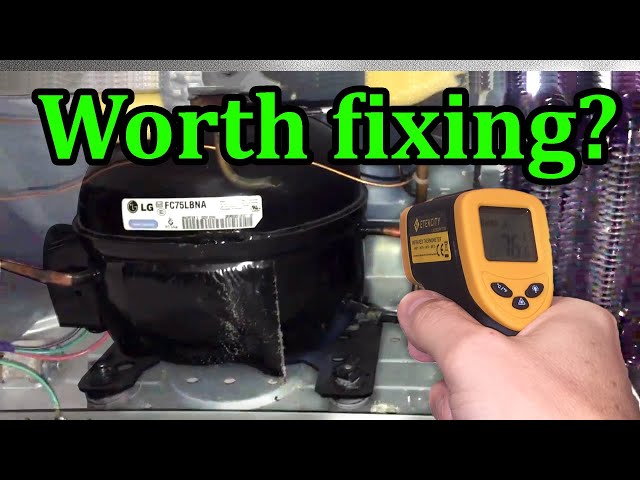
- Faulty Compressor: While running, the compressor itself may be failing internally. It might be making noise but not effectively compressing refrigerant.
- Blocked Evaporator Coils: Ice buildup on the evaporator coils prevents them from absorbing heat.
- Airflow Obstruction: Items packed too tightly inside the fridge can block airflow, leading to uneven cooling.
- Damaged Door Seals: Worn or damaged door seals let warm air in, forcing the fridge to work harder and potentially failing to cool properly.
- Voltage Issues: Insufficient voltage from your 12v power source can prevent the compressor from operating efficiently.
- Faulty Thermostat: The thermostat controls the temperature. If it’s broken, it might not be telling the compressor to cool properly.
- Blocked or Kinked Refrigerant Lines: A blockage or kink in the refrigerant lines can restrict the flow of refrigerant.
Symptoms Checklist
Look for these signs to accurately identify the problem:
- Compressor is running (you can hear it).
- Inside of the fridge is warm or only slightly cool.
- Condenser coils (usually on the back) are not warm to the touch.
- Ice buildup on the back panel inside the fridge.
- Unusual noises coming from the compressor.
- Door seal is visibly damaged or doesn’t seal tightly.
- Fridge is consuming more power than usual.
How to Fix 12v fridge compressor running but not cooling Step-by-Step Guide
Follow these steps to troubleshoot your 12v fridge:
- Check the Power Supply: Ensure the fridge is receiving a stable 12v power supply. Use a voltmeter to check the voltage at the fridge’s power connector. Should be close to 12V, ideally above 11.5V.
- Inspect the Door Seals: Check the door seals for damage, cracks, or gaps. Clean the seals with a damp cloth. A simple test is to close the door on a dollar bill. If you can pull it out easily, the seal is likely compromised.
- Clean the Condenser Coils: Locate the condenser coils (usually on the back of the fridge). Unplug the fridge. Use a vacuum cleaner with a brush attachment to remove dust and dirt.
- Defrost the Fridge: If you suspect ice buildup, unplug the fridge and allow it to defrost completely. You can speed this up by placing a bowl of hot water inside. Ensure to dry all the water after.
- Check for Airflow Obstructions: Make sure items inside the fridge aren’t blocking the vents. Rearrange items to allow for good airflow. Don’t overpack.
- Listen to the Compressor: Listen closely to the compressor. Does it sound normal, or are there unusual noises like rattling or clicking? Record the sounds for later use if needed.
- Inspect the Wiring: Check the wiring connections to the compressor and thermostat for loose or corroded connections. Clean and tighten any loose connections.
- Check the Thermostat Setting: Make sure the thermostat is set to an appropriate cooling level. Try turning it up or down to see if it makes a difference.
- Test the Thermostat (Advanced – Requires Multimeter): If you’re comfortable using a multimeter, you can test the thermostat for continuity. Disconnect the thermostat and use the multimeter to check if it’s switching on and off as you adjust the temperature setting.
- Inspect the Refrigerant Lines: Check the refrigerant lines for any visible kinks or damage. Straighten any kinks carefully.
- Check the Fridge’s Level: An unlevel fridge can cause problems with the refrigerant flow. Use a level to ensure the fridge is sitting level.
- Perform a Hard Reset: Disconnect the fridge from the power source for at least 30 minutes. This can sometimes reset the electronics and resolve minor issues.
Fix the Issue Without Buying Parts
Many fridge problems can be solved without spending money:
- Thorough Cleaning: Cleaning the condenser coils and interior can significantly improve performance.
- Proper Loading: Avoid overpacking the fridge and ensure proper airflow.
- Door Seal Maintenance: Regularly clean the door seals to maintain a tight seal.
- Voltage Check & Correction: Ensure the fridge is receiving a stable and sufficient voltage.
- Hard Reset: A simple power cycle can sometimes resolve electronic glitches.
When Replacement Might Be Necessary
If the above steps don’t work, the compressor, thermostat, or other internal components may be faulty. Replacement should be considered as a last resort after you have attempted all troubleshooting steps. Replacing the compressor typically costs between $200 and $500 (USD), including labor. Thermostats are less expensive, ranging from $50 to $150 (USD). Common failing parts are the compressor itself, the thermostat, and occasionally, the electronic control board.
Safety Warning
- Always unplug the fridge before performing any maintenance or repairs.
- Avoid working on electrical components if you are not comfortable or qualified.
- Keep the area around the fridge dry to prevent electrical shock.
- Be careful when handling refrigerant lines, as refrigerant can cause frostbite.
Tools You May Need
- Screwdrivers (Phillips and flathead)
- Vacuum cleaner with brush attachment
- Voltmeter/Multimeter
- Wrench set
- Level
- Cleaning cloths
FAQ
Here are some frequently asked questions:
-
Q: Why is my fridge running constantly but not cooling?
A: This often indicates a refrigerant leak, dirty condenser coils, or a failing compressor. -
Q: How do I know if my compressor is bad?
A: Signs of a bad compressor include unusual noises, failure to start, or running continuously without cooling. -
Q: Can I add refrigerant to my 12v fridge myself?
A: Adding refrigerant requires specialized equipment and knowledge and is best left to qualified technicians. -
Q: How often should I clean the condenser coils?
A: Clean the condenser coils at least every six months, or more often if you have pets or live in a dusty environment. -
Q: Why is there ice buildup in my fridge?
A: Ice buildup can be caused by a faulty door seal, improper temperature settings, or a malfunctioning defrost system.
Conclusion
Troubleshooting a 12v fridge that’s running but not cooling can seem daunting, but with these steps, you can often identify and fix the problem yourself. Before calling a technician, take the time to go through each step carefully. You might be surprised at how much you can accomplish on your own! However, if you’re not comfortable with any of these steps, or if the problem persists, it’s best to consult a qualified appliance repair technician.
Youtube Video:
Quick Wiring Specifications & Terminal Guide
| Component / Circuit | Standard Wire Gauge | Recommended Protection |
|---|---|---|
| Control & Trigger Signals | 18 – 20 AWG | 5A – 7.5A Inline Fuse |
| Standard Auxiliary Load | 14 – 16 AWG | 15A – 20A Circuit Breaker |
| Main Power Feed / Supply | 10 – 12 AWG | 30A – 40A Heavy-Duty Relay |
Images References
Looking for more diagnostic guides? Explore our complete Refrigerator Problems 1 section for step-by-step troubleshooting solutions.
