
Introduction
Is your Nest thermostat displaying the correct settings, but your house feels like a sauna? This is a common issue that many homeowners face. When your Nest thermostat isn’t cooling your house as expected, it can be frustrating and uncomfortable, especially during hot weather. Ignoring this problem can lead to discomfort, increased energy bills, and potentially even damage to your HVAC system. Let’s get your home cool again!
💡 Technical Key Takeaways:
- Core Focus: Diagnostic schematic and terminal connection layout for My Nest Thermostat Is Not Cooling My House.
- Target Scope: Field technicians, automotive DIYers, and residential/commercial electricians.
- Safety Rule: Always disconnect the primary power source/battery terminal and verify zero voltage with a multimeter before touching wires.
Common Causes of my nest thermostat is not cooling my house
Here are some reasons why your Nest thermostat might not be cooling your house:
- Incorrect Thermostat Settings: The thermostat might be set to “Heat” instead of “Cool,” or the target temperature might be set too high.
- Wi-Fi Connectivity Issues: If your Nest thermostat loses its Wi-Fi connection, it might not be communicating with your HVAC system properly.
- Faulty Wiring: Incorrect or loose wiring can prevent the thermostat from sending the correct signals to your air conditioner.
- Tripped Circuit Breaker: A tripped circuit breaker could be cutting power to your air conditioner unit.
- Clogged Air Filter: A dirty air filter restricts airflow, making it harder for your air conditioner to cool your home effectively.
- Frozen Evaporator Coil: Ice buildup on the evaporator coil can block airflow and prevent cooling.
- Refrigerant Leaks: Low refrigerant levels can significantly reduce your air conditioner’s cooling capacity.
- Blocked Condenser Unit: Obstructions around the outdoor condenser unit can impede its ability to dissipate heat.
- HVAC System Issues: The problem might not be with the Nest thermostat at all, but with the air conditioning unit itself.
Symptoms Checklist
These indicators will help you pinpoint the cooling issue:
- The Nest thermostat displays “Cooling,” but the air coming from vents is warm.
- The air conditioner unit isn’t turning on at all.
- The Nest thermostat shows an error message related to cooling.
- Cooling runs for a short time, then shuts off.
- Uneven cooling throughout the house.
How to Fix my nest thermostat is not cooling my house Step-by-Step Guide
- Verify the Thermostat Setting: Ensure your Nest is set to “Cool” mode and the target temperature is lower than the current room temperature.
- Check the Wi-Fi Connection: Use the Nest app to confirm your thermostat is connected to your Wi-Fi network. If not, reconnect it.
- Restart Your Nest Thermostat: A simple restart can resolve minor software glitches. Go to Settings > Restart.
- Check Your Air Filter: Remove the air filter and inspect it. If it’s dirty, replace it with a new one.
- Inspect the Circuit Breaker: Go to your electrical panel and check the breaker for your air conditioner. If it’s tripped, reset it.
- Check the Outdoor Condenser Unit: Ensure the unit is free from obstructions like leaves, branches, or debris. Clear away anything blocking airflow.
- Inspect the Wiring (If Comfortable): Turn off the power to the HVAC system at the breaker. Carefully remove the Nest thermostat from the wall and check for loose or disconnected wires. If you are not comfortable with this, skip to the next step.
- Restart Your HVAC System: Turn off the power to your HVAC system at the breaker, wait a few minutes, and then turn it back on.
- Check the Nest Learning History: In the Nest app, review the learning history to see if any unusual changes have been made to the schedule.
- Test Different Cooling Modes: Try switching between “Eco” mode and regular “Cool” mode to see if there’s any difference.
- Adjust the Nest Thermostat Placement: Ensure the thermostat is not exposed to direct sunlight or drafts, which can affect its temperature readings.
- Contact Nest Support: If you’ve tried all the above steps and the problem persists, contact Nest support for further assistance.
Fix the Issue Without Buying Parts
Sometimes, you can resolve the issue without spending any money:
- Reset the Nest Thermostat: Perform a factory reset to clear all settings and start fresh. This can often resolve software-related issues.
- Clean the Thermostat: Gently wipe the thermostat screen and casing with a soft, dry cloth to remove dust and debris.
- Recalibrate the Thermostat (If Applicable): Some Nest models allow for temperature recalibration. Check your user manual for instructions.
- Schedule Maintenance: Regularly check and clean your air filter and outdoor condenser unit to prevent future cooling problems.
When Replacement Might Be Necessary
If all troubleshooting steps fail, the problem could stem from a failing HVAC system component or a faulty Nest thermostat. If your AC unit is very old and inefficient, replacement is a good solution. A Nest thermostat replacement can be considered if it’s malfunctioning. Nest Thermostats (E, Learning) range roughly from $150 to $250. The most commonly failing HVAC components are the compressor ($800$2,000) or the fan motor ($200-$800).
Safety Warning
- Always turn off the power to your HVAC system at the breaker before inspecting or working on any electrical components.
- If you are uncomfortable with electrical work, contact a qualified HVAC technician.
- Avoid working on your HVAC system in wet conditions.
Tools You May Need
- Screwdriver (Phillips and flathead)
- New air filter
- Soft cloth
- Vacuum cleaner with brush attachment
FAQ
Q: Why is my Nest thermostat set to “Eco” mode and not cooling properly?
A: “Eco” mode is designed to save energy, so it might not cool your house as much as regular “Cool” mode. Switch to “Cool” mode for more effective cooling.
Q: How often should I change my air filter?
A: It depends on usage, but generally, you should replace your air filter every 1-3 months.
Q: My Nest thermostat keeps losing its Wi-Fi connection. What can I do?
A: Ensure your router is working correctly, and the thermostat is within range of the Wi-Fi signal. Restarting both the thermostat and the router can help.
Q: Is it normal for the outdoor condenser unit to make noise?
A: Some noise is normal, but loud or unusual noises could indicate a problem. Contact an HVAC technician if you’re concerned.
Conclusion
Troubleshooting a Nest thermostat that’s not cooling your house can seem daunting, but by following these steps, you can often identify and resolve the issue yourself. Remember to prioritize safety and don’t hesitate to contact a qualified HVAC technician if you’re unsure or uncomfortable with any part of the process. Getting your home cool again is possible, and you can often achieve it with a little bit of DIY effort!
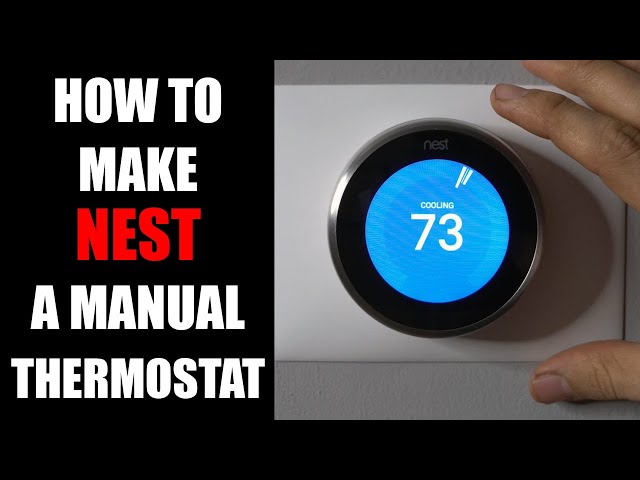
Youtube Video:
Quick Wiring Specifications & Terminal Guide
| Component / Circuit | Standard Wire Gauge | Recommended Protection |
|---|---|---|
| Control & Trigger Signals | 18 – 20 AWG | 5A – 7.5A Inline Fuse |
| Standard Auxiliary Load | 14 – 16 AWG | 15A – 20A Circuit Breaker |
| Main Power Feed / Supply | 10 – 12 AWG | 30A – 40A Heavy-Duty Relay |
Images References
Looking for more diagnostic guides? Explore our complete Air Conditioner Troubleshooting 5 section for step-by-step troubleshooting solutions.
