
Introduction
There’s nothing worse than hopping into your Hyundai Tucson on a hot day and being greeted by a blast of warm air from the AC. A malfunctioning air conditioner can make driving uncomfortable and even dangerous, especially on long trips. This guide will help you understand the common causes of this issue and walk you through troubleshooting steps you can take yourself. Addressing this promptly is important, as a failing AC system can sometimes lead to more significant and costly repairs down the road. Explore more in our Air Conditioner Troubleshooting 5 collection.
💡 Technical Key Takeaways:
- Core Focus: Diagnostic schematic and terminal connection layout for Hyundai Tucson Air Conditioner Blowing Warm Air.
- Target Scope: Field technicians, automotive DIYers, and residential/commercial electricians.
- Safety Rule: Always disconnect the primary power source/battery terminal and verify zero voltage with a multimeter before touching wires.
Common Causes of Hyundai Tucson Air Conditioner Blowing Warm Air
Here are some of the most frequent reasons why your Tucson’s AC might be blowing warm air:
- Low Refrigerant: This is the most common culprit. Refrigerant is the lifeblood of your AC system. If it’s low, the AC won’t cool effectively.
- Refrigerant Leak: If your refrigerant is low, it likely means there’s a leak somewhere in the system.
- Faulty Compressor: The compressor is the heart of the AC system, responsible for compressing the refrigerant. If it fails, the AC won’t work.
- Clogged Condenser: The condenser dissipates heat. If it’s blocked by debris (leaves, bugs), it can’t do its job, and the AC performance suffers.
- Blocked Evaporator: Similar to the condenser, the evaporator can get clogged, restricting airflow and reducing cooling efficiency.
- Failed Blower Motor: The blower motor is responsible for pushing air through the vents. If it fails, you won’t get any air, cold or warm.
- Electrical Issues: Problems with wiring, fuses, or relays can prevent the AC system from functioning correctly.
- Stuck Blend Door: The blend door controls the mix of hot and cold air. If it’s stuck in the hot position, you’ll only get warm air.
Symptoms Checklist
Use this checklist to help pinpoint the problem:
- AC blows warm air, even on the coldest setting.
- AC blows cold air intermittently.
- Unusual noises coming from the AC compressor.
- Refrigerant leaks visible under the car (usually a greasy, oily substance).
- Weak airflow from the vents.
- AC works fine while driving but blows warm air when idling.
How to Fix Hyundai Tucson Air Conditioner Blowing Warm Air Step-by-Step Guide
Follow these steps to troubleshoot your AC system:
- Check the AC Button: Ensure the AC button is pressed and the recirculation button is also activated. Believe it or not, this can be the issue!
- Inspect the Fuses: Locate the fuse box (usually under the hood or in the passenger compartment). Check the fuses related to the AC system (compressor, blower motor). Replace any blown fuses with the correct amperage rating. Consult your owner’s manual for fuse locations and ratings.
- Check the Cabin Air Filter: A clogged cabin air filter can restrict airflow. Locate the cabin air filter (usually behind the glove box) and inspect it. Replace it if it’s dirty.
- Inspect the Condenser: Locate the condenser (usually in front of the radiator). Check for debris blocking airflow. Carefully remove any leaves, bugs, or other obstructions with a soft brush or garden hose.
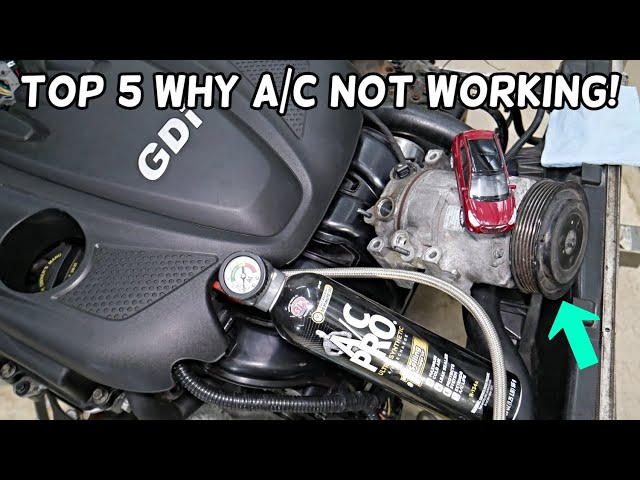
- Listen for the Compressor Clutch: With the engine running and the AC on, listen for a click sound from the compressor. This indicates that the compressor clutch is engaging. If you don’t hear a click, the compressor may not be getting power or the clutch may be faulty.
- Visually Inspect the Compressor: Look at the compressor. Is the clutch spinning along with the engine pulley? If not, the clutch may be the problem.
- Check the Refrigerant Level (Visually): Many AC systems have a sight glass near the receiver drier (a cylindrical component in the AC system). With the AC running, look through the sight glass. If you see bubbles or foam, it’s a sign that the refrigerant level is low. Note: DO NOT open the refrigerant lines yourself. This must be done by a qualified technician!
- Check for Leaks (Visually): Inspect around the compressor, condenser, and refrigerant lines for any signs of leaks. Look for oily residue or dirt accumulation.
- Check for proper Fan Operation: Make sure the radiator cooling fan is running when the AC is on. If not, this could be contributing to poor AC performance.
- Feel the AC Lines: With the AC running, carefully feel the AC lines. One line (the high-pressure line) should be warm, and the other (the low-pressure line) should be cold. If both lines are the same temperature, it could indicate a problem with the compressor or refrigerant flow.
Fix the Issue Without Buying Parts
Before considering replacement parts, try these free methods:
- Reset the System: Sometimes, simply turning off your car, waiting a few minutes, and restarting it can reset the AC system.
- Cleaning: Clean the condenser and cabin air filter as described above.
- Basic Maintenance: Regular car maintenance can prevent AC issues. Follow your manufacturer’s recommended service schedule.
- Proper Fan Speed: Ensure you’re using appropriate fan speeds for the current conditions.
When Replacement Might Be Necessary
If the above steps don’t resolve the issue, replacement of components may be needed. Here are some common failing parts and estimated costs (USD):. For more related activities, check out our My Window Unit Air Conditioner Is Leaking Water.
- Compressor: $400 – $800 (plus labor)
- Condenser: $200 – $400 (plus labor)
- Evaporator: $300 – $600 (plus labor – this is a more complex job)
- Blower Motor: $100 – $300 (plus labor)
- Refrigerant Leak Repair: Varies widely depending on the location and severity of the leak.
A qualified technician can perform a diagnostic test to identify the exact failing component.
Safety Warning
- Never work on the AC system with the engine running.
- Refrigerant is harmful. Never release refrigerant into the atmosphere.
- If you suspect a refrigerant leak, avoid breathing the fumes.
- If you are not comfortable working on your car, consult a qualified mechanic.
Tools You May Need
- Screwdrivers (Phillips and flathead)
- Socket set
- Wrench set
- Fuse puller
- Flashlight
- Work gloves
- Safety glasses
FAQ
Here are some frequently asked questions about AC problems:
- Q: Why is my AC blowing warm air only when I’m idling? A: This often indicates a problem with the condenser fan or low refrigerant.
- Q: How often should I recharge my AC refrigerant? A: AC systems are closed loops and ideally, never need recharging. A low refrigerant level suggests a leak.
- Q: Can I add refrigerant myself? A: While DIY kits are available, it’s recommended to have a qualified technician handle refrigerant charging, as overcharging can damage the system.
- Q: What does it mean if my AC smells musty? A: A musty smell often indicates mold or mildew growth in the evaporator core.
- Q: My AC makes a loud noise when I turn it on. What could it be? A: Loud noises often indicate a problem with the compressor or its clutch.
Conclusion
Troubleshooting your Hyundai Tucson’s AC can seem daunting, but by following these steps, you can identify and potentially fix the problem yourself. Remember to prioritize safety and consult a qualified technician if you’re not comfortable performing any of these procedures. Often, a simple fix like cleaning or fuse replacement is all that’s needed. Good luck getting your AC blowing cold again!. Discover more free resources across our collection library.
Youtube Video:
Quick Wiring Specifications & Terminal Guide
| Component / Circuit | Standard Wire Gauge | Recommended Protection |
|---|---|---|
| Control & Trigger Signals | 18 – 20 AWG | 5A – 7.5A Inline Fuse |
| Standard Auxiliary Load | 14 – 16 AWG | 15A – 20A Circuit Breaker |
| Main Power Feed / Supply | 10 – 12 AWG | 30A – 40A Heavy-Duty Relay |
