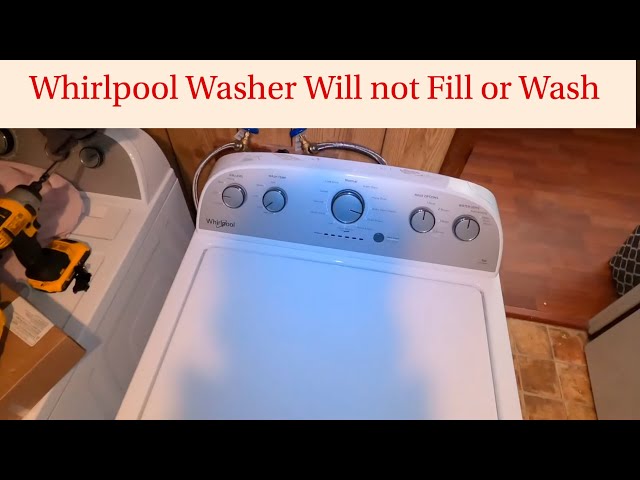
Introduction
Discovering that your Whirlpool washer won’t fill with water can be a real headache. Laundry piling up? Clothes sitting damp and untouched? This issue prevents your washing machine from doing its job, leading to frustration and potential delays in your routine. It’s a common problem that many homeowners face, and fortunately, it’s often fixable without calling a professional. We’ll guide you through the process, saving you time and money.
Common Causes of My Whirlpool Washer Will Not Fill With Water
Here are some frequent reasons why your Whirlpool washer might be refusing to fill:
- Water Supply Valves Turned Off: The most common culprit! Make sure both hot and cold water valves behind the washer are fully open.
- Kinked or Blocked Water Hoses: Hoses can get twisted, kinked, or clogged with sediment.
- Clogged Inlet Screens: Small screens at the hose connections to the washer catch debris.
- Faulty Water Inlet Valve: This valve controls the flow of water into the washer. If it fails, no water gets in.
- Pressure Switch Problems: The pressure switch senses the water level. If it malfunctions, it might incorrectly signal that the washer is full.
- Lid Switch Issues: Many washers won’t fill if the lid switch isn’t properly engaged.
- Problem with the Timer/Control Board: On some models, a faulty timer or electronic control board can prevent the water from turning on.
- Low Water Pressure: Insufficient water pressure coming into your home can prevent the washer from filling.
Symptoms Checklist
Use this checklist to pinpoint the exact problem:
- Washer makes no noise when it should be filling.
- Washer makes a humming noise, but no water enters.
- Washer fills very slowly.
- Washer fills partially, then stops.
- Error code displayed on the washer’s control panel.
- Water pressure in other faucets in the house is normal.
How to Fix My Whirlpool Washer Will Not Fill With Water Step-by-Step Guide
Follow these steps to diagnose and fix your washer:
- Safety First! Unplug the washer from the power outlet. This is crucial for your safety.
- Check Water Supply Valves: Locate the hot and cold water supply valves behind the washer. Ensure both are fully open. Turn them counterclockwise to open them fully.
- Inspect Water Hoses: Look for any kinks, bends, or visible damage to the hoses. Straighten any kinks. If hoses are cracked or bulging, they should eventually be replaced.
- Clean Inlet Screens: Turn off the water supply valves. Disconnect the water hoses from the back of the washer. Use pliers to carefully remove the inlet screens. Clean the screens under running water with a small brush (an old toothbrush works great!). Reinstall the screens and reconnect the hoses. Make sure they are tightened correctly.
- Check Water Pressure: Disconnect one of the hoses and place the end into a bucket. Briefly turn on the water supply. The water should flow out with good pressure. If the pressure is weak, there might be a plumbing issue in your home.
- Test the Lid Switch: Open and close the washer lid several times. Listen for a click sound. If you don’t hear a click, the lid switch might be faulty. Locate the lid switch and gently press it with your finger; if the switch feels loose or broken, it may need to be replaced.
- Reset the Washer: Unplug the washer for 1-2 minutes, then plug it back in. This can sometimes reset the control board and resolve minor glitches.
- Check for Error Codes: Refer to your washer’s user manual to identify the meaning of any error codes displayed on the control panel. Many codes indicate specific problems.
- Listen to the Water Inlet Valve: Start a wash cycle. Carefully listen for a humming sound near the water inlet valve (where the hoses connect to the washer). If you hear a hum but no water is flowing, the valve is likely receiving power but not opening.
Fix the Issue Without Buying Parts
Before considering replacements, try these free methods:
- Full Reset: Unplug the washer for a longer period (30 minutes to an hour) to allow any residual electricity to dissipate.
- Hose Inspection and Cleaning: Remove the hoses completely and flush them out with water to remove any sediment buildup.
- Washer Recalibration: Some Whirlpool models have a recalibration cycle. Consult your user manual for instructions on how to initiate it.
- Check for Obstructions: Examine the area around the washer for anything that might be pressing against the hoses or interfering with the lid switch.
When Replacement Might Be Necessary
If you’ve tried all the troubleshooting steps and the washer still won’t fill, the water inlet valve or the lid switch might be faulty and needs replacing. You can find replacement parts online or at appliance repair stores. The cost of a water inlet valve typically ranges from $30 to $70, while a lid switch is usually between $20 and $50. In rare cases, a faulty control board may be the culprit, which can be a more expensive repair (ranging from $100 – $300). Replacing the washer is another option you can explore.
Safety Warning
- Always unplug the washer before attempting any repairs.
- Be careful when handling water; wipe up any spills immediately to prevent slips.
- If you’re uncomfortable working with electrical components, consult a qualified appliance repair technician.
Tools You May Need
- Pliers
- Screwdrivers (Phillips and flathead)
- Small brush (e.g., toothbrush)
- Bucket
- Adjustable wrench
FAQ
Here are some common questions about washer filling issues:
- Q: Why is my washer filling slowly? A: It could be due to low water pressure, partially clogged inlet screens, or a partially blocked water hose.
- Q: My washer only fills with cold water. What’s wrong? A: The hot water supply valve might be turned off, the hot water hose could be kinked, or the hot water inlet valve on the washer might be faulty.
- Q: Can I bypass the lid switch to test if that’s the problem? A: It is not recommended to bypass the lid switch for safety reasons. It’s best to test it with a multimeter or replace it if you suspect it’s faulty.
- Q: How do I know if the water inlet valve is bad? A: If you hear a humming sound when the valve should be opening but no water is flowing, it’s a good indication that the valve is faulty.
Conclusion
Troubleshooting a washer that won’t fill with water can seem daunting, but by following these steps, you can often identify and fix the problem yourself. Remember to prioritize safety and double-check all connections. If you’re still having trouble after trying these solutions, it might be time to call a qualified appliance repair technician. Don’t give up you can get your laundry routine back on track!
Youtube Video:
Looking for more useful options?
Check out recommended resources that others find helpful.