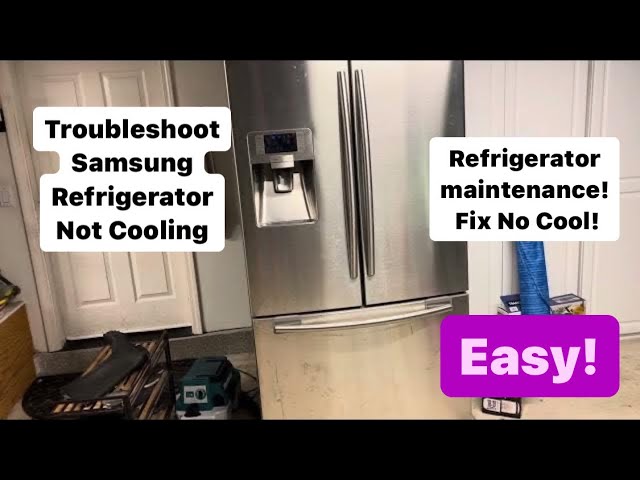
Introduction
A freezer that isn’t cooling properly is a major headache! Food can spoil quickly, leading to wasted money and potential health risks. If your Samsung French Door freezer is warmer than usual, or your ice cream is melting, it’s essential to address the problem immediately. This guide will walk you through common causes and simple fixes to get your freezer back to its optimal temperature.
Common Causes of Samsung French Door Freezer Not Cooling
Here are several potential reasons why your Samsung French Door freezer isn’t cooling as it should:
- Overpacked Freezer: Too many items block airflow, preventing proper cooling.
- Dirty Condenser Coils: Dust and debris on the coils hinder heat dissipation.
- Blocked Air Vents: Obstructions inside the freezer impede cold air circulation.
- Door Seal Issues: A damaged or dirty seal allows warm air to enter.
- Temperature Setting: The temperature setting might be set too high accidentally.
- Defrost System Malfunction: Frost buildup prevents efficient cooling.
- Faulty Condenser Fan Motor: A malfunctioning fan won’t circulate air across the condenser coils.
- Evaporator Fan Motor Problem: If the evaporator fan isn’t running, cold air won’t circulate within the freezer.
- Control Board Issues: Rarely, the control board might malfunction, causing cooling problems.
Symptoms Checklist
Use this checklist to accurately identify the problem:
- Freezer temperature is above 32F (0C).
- Food is thawing or partially melted.
- Ice cream is soft.
- There’s excessive frost buildup inside the freezer.
- The freezer is running constantly but not cooling.
- You hear unusual noises coming from the freezer.
- The refrigerator section is cooling normally.
How to Fix Samsung French Door Freezer Not Cooling Step-by-Step Guide
Follow these steps to troubleshoot your freezer:
- Check the Temperature Setting: Make sure the freezer temperature is set to the recommended setting (usually around 0F or -18C).
- Clean the Condenser Coils: Unplug the refrigerator. Locate the condenser coils (usually at the back or bottom of the unit). Use a vacuum cleaner with a brush attachment to remove dust and debris.
- Inspect the Door Seal: Examine the door seal (gasket) for damage, tears, or gaps. Clean the seal with warm soapy water.
- Check for Obstructions: Remove items blocking the air vents inside the freezer. Ensure air can circulate freely.
- Defrost the Freezer (Manually): If there’s excessive frost buildup, manually defrost the freezer. Unplug the unit, remove all food, and let the frost melt completely. This may take several hours. You can speed it up with a fan. Clean the interior after defrosting.
- Listen to the Fans: Listen for the condenser fan (usually at the back) and the evaporator fan (inside the freezer). If either fan isn’t running, it may be faulty.
- Check the Overload Protector and Start Relay (for advanced users): The overload protector and start relay are usually located near the compressor. If you are comfortable working with electrical components (exercise extreme caution!), test these with a multimeter. Unplug the unit before touching anything. If you are not comfortable with this step, skip it.
- Reset the Refrigerator: Unplug the refrigerator for 5-10 minutes, then plug it back in. This can sometimes reset the control board.
- Level the Refrigerator: Ensure the refrigerator is level. An unlevel refrigerator can affect door seal and overall performance.
- Check the Ice Maker: A malfunctioning ice maker can sometimes cause issues with the freezer temperature. If your ice maker is constantly running or leaking, try turning it off to see if it helps.
Fix the Issue Without Buying Parts
Before considering parts replacement, try these free methods:
- Reset: Unplugging the refrigerator for 5-10 minutes is a simple reset that can sometimes resolve minor glitches.
- Cleaning: Regularly cleaning the condenser coils and door seals is crucial for maintaining proper cooling.
- Recalibration: Some models have a recalibration feature in the settings. Consult your owner’s manual.
- Inspection Tips: Look for any obvious signs of damage, like bent coils or loose wires (unplug the unit first!).
- Maintenance Basics: Avoid overpacking the freezer and keep the door closed as much as possible.
When Replacement Might Be Necessary
If none of the above steps work, a component failure might be the cause. Consider these points:
- Compressor: If the compressor is faulty, replacement is usually expensive (can range from $500-$1000 including labor) and might not be worth it for an older unit.
- Control Board: A faulty control board can cost between $200-$400 to replace (including labor).
- Fan Motors: Replacing a fan motor is less expensive ($100-$200 including labor).
Safety Warning
Follow these safety precautions:
- Always unplug the refrigerator before performing any maintenance or repairs.
- Avoid working on the refrigerator with wet hands or on a wet floor.
- Be careful when handling electrical components. If you’re not comfortable, hire a qualified technician.
Tools You May Need
Here’s a list of helpful tools:
- Screwdriver (Phillips and flathead)
- Vacuum cleaner with brush attachment
- Warm soapy water and a cloth
- Multimeter (optional, for advanced users)
FAQ
Here are some frequently asked questions:
- Q: Why is my freezer cold but the refrigerator is warm? A: This could indicate a problem with the damper that controls airflow between the freezer and refrigerator.
- Q: How often should I clean the condenser coils? A: Ideally, clean them every 6 months.
- Q: What temperature should my freezer be set to? A: 0F (-18C) is the recommended temperature.
- Q: How long can food stay in a freezer that’s not cooling properly? A: It depends on how warm the freezer gets. Discard any food that has been above 40F (4C) for more than 2 hours.
Conclusion
Troubleshooting a freezer that’s not cooling can seem daunting, but by following these steps, you can often identify and fix the problem yourself. Remember to prioritize safety and take your time. If you’ve tried these solutions and your Samsung French Door freezer is still not cooling, it might be time to call a qualified appliance repair technician. Good luck!
Youtube Video:
Looking for more useful options?
Check out recommended resources that others find helpful.