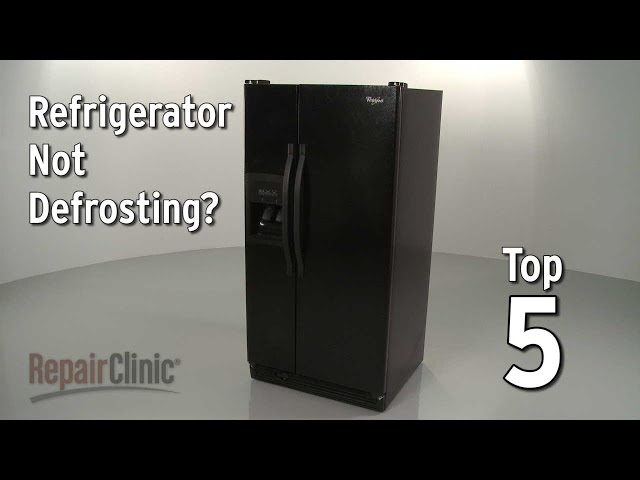
Introduction
A Kenmore refrigerator that won’t defrost is a common problem, leading to ice buildup, reduced cooling efficiency, and eventually, food spoilage. When your refrigerator stops defrosting, ice accumulates on the back wall of the freezer compartment, taking up valuable space and potentially damaging the appliance. It’s important to address this issue promptly, as prolonged ice buildup can lead to compressor failure and costly repairs. If you notice ice forming rapidly or your food isn’t staying as cold as it used to, it’s time to investigate.
Common Causes of Kenmore Refrigerator Won’t Defrost
Here are some of the most common reasons why your Kenmore refrigerator may not be defrosting:
- Defrost Timer Malfunction: The defrost timer controls when the defrost cycle begins. If it’s faulty, the cycle may not start at all.
- Defrost Heater Failure: The defrost heater melts the frost on the evaporator coils. If it burns out, ice will accumulate.
- Defrost Thermostat Issues: The defrost thermostat monitors the temperature of the evaporator coils. If it’s defective, it might not signal the heater to turn on.
- Blocked Defrost Drain: A clogged drain can prevent water from melting during the defrost cycle from draining properly, leading to ice buildup.
- Faulty Defrost Control Board: On some newer models, an electronic control board manages the defrost cycle. A malfunctioning board can disrupt the process.
- Damaged Door Seals: Worn or damaged door seals allow warm, moist air to enter the refrigerator, contributing to excessive frost buildup.
- Overcrowding Refrigerator: Excessively packed items can restrict airflow and affect temperature regulation, making defrosting less efficient.
- Faulty Temperature Sensor: Some models use temperature sensors to control the defrost cycle. If the sensor is bad, it can cause the cycle to not run.
Symptoms Checklist
Use this checklist to confirm if your Kenmore refrigerator is experiencing a defrost problem:
- Excessive ice buildup on the back wall of the freezer.
- Food in the freezer has ice crystals on it.
- The refrigerator section is warmer than usual.
- The freezer section seems to be working fine, but the fridge is not cold enough.
- You hear the refrigerator running constantly.
- Water pooling inside the refrigerator or on the floor in front of it.
- Visible ice dam at the bottom of the freezer compartment.
How to Fix Kenmore Refrigerator Won’t Defrost Step-by-Step Guide
Follow these steps to troubleshoot your Kenmore refrigerator’s defrost issue:
- Unplug the Refrigerator: Always disconnect the appliance from the power outlet before attempting any repairs.
- Empty the Freezer: Remove all food items from the freezer and store them in a cooler to prevent spoilage.
- Remove Freezer Shelves and Drawers: Take out any removable shelves and drawers to access the back panel of the freezer.
- Locate the Back Panel: The back panel covers the evaporator coils and defrost components.
- Remove the Back Panel: Use a screwdriver (usually Phillips head) to remove the screws securing the back panel. Be careful not to damage any wires.
- Inspect the Evaporator Coils: Check for excessive ice buildup on the evaporator coils. If they are completely encased in ice, the defrost system is not working.
- Locate the Defrost Heater: The defrost heater is usually located at the bottom of the evaporator coils. It’s often a metal tube or a wire element.
- Visually Inspect the Defrost Heater: Look for any signs of damage, such as breaks, burns, or corrosion.
- Check the Defrost Thermostat: The defrost thermostat is a small sensor clipped to the evaporator coils. It’s usually a bimetallic snap-disc type.
- Locate the Defrost Drain: The defrost drain is typically located at the bottom of the evaporator coils, often near the defrost heater.
- Clear the Defrost Drain: Use a long, flexible object (like a pipe cleaner or a turkey baster) to clear any blockage in the drain. You can also use warm water to flush out the drain.
- Melt the Ice: If there’s significant ice buildup, you can use a hair dryer on a low setting to carefully melt the ice. Be extremely careful not to melt or damage any plastic parts. Alternatively, you can leave the refrigerator unplugged with the door open for several hours to allow the ice to melt naturally.
- Reassemble the Freezer: Once the ice is melted and the drain is clear, reattach the back panel, shelves, and drawers.
- Plug the Refrigerator Back In: Restore power to the appliance.
- Monitor the Refrigerator: Observe the refrigerator over the next 24-48 hours to see if the defrost system is functioning correctly.
Fix the Issue Without Buying Parts
Before considering part replacements, try these free methods:
- Refrigerator Reset: Unplug the refrigerator for 30 minutes to reset the system.
- Clean Door Seals: Clean the door seals with warm, soapy water to ensure a tight seal.
- Inspect for Obstructions: Make sure nothing is blocking the vents inside the refrigerator or freezer.
- Proper Loading: Don’t overcrowd the refrigerator or freezer, as this can restrict airflow.
- Temperature Setting: Ensure the temperature setting is appropriate (typically around 37F for the refrigerator and 0F for the freezer).
When Replacement Might Be Necessary
If the above steps don’t resolve the issue, a component replacement may be needed. The defrost heater ($30-$70), defrost thermostat ($15-$40), or defrost timer ($20-$60) are common culprits. A faulty defrost control board can cost more ($50 – $150). Replacing these parts requires careful diagnosis and technical skills, so consider calling a qualified appliance repair technician if you’re uncomfortable performing these repairs yourself.
Safety Warning
- Always unplug the refrigerator before performing any repairs.
- Avoid working on electrical components with wet hands or in wet areas.
- Be careful when using a hairdryer to melt ice, as excessive heat can damage plastic parts.
- If you are not comfortable working with electrical appliances, contact a qualified technician.
Tools You May Need
- Screwdriver (Phillips head)
- Pipe cleaner or flexible wire
- Hair dryer (optional)
- Multimeter (optional, for testing components)
- Gloves
FAQ
Here are some frequently asked questions about refrigerator defrost problems:
-
Q: How often should my Kenmore refrigerator defrost?
A: Most Kenmore refrigerators defrost automatically every 8-12 hours. -
Q: How do I know if my defrost heater is working?
A: Visually inspect for damage. A multimeter can also be used to check for continuity in the heater element (when unplugged). -
Q: Can I manually defrost my refrigerator?
A: Yes, you can manually defrost your refrigerator by unplugging it and leaving the door open until all the ice melts. -
Q: What happens if I don’t fix the defrost problem?
A: Continuing ice buildup can lead to reduced cooling efficiency, food spoilage, and eventually, compressor failure.
Conclusion
A Kenmore refrigerator that won’t defrost can be a frustrating problem, but by following these troubleshooting steps, you can often identify and resolve the issue yourself. Remember to prioritize safety and take your time. If you’ve tried these steps and your refrigerator still isn’t defrosting properly, it may be time to call a qualified appliance repair technician for further assistance. Don’t be afraid to try fixing it yourself first; you might save some money and learn something new in the process!
Youtube Video:
Looking for more useful options?
Check out recommended resources that others find helpful.