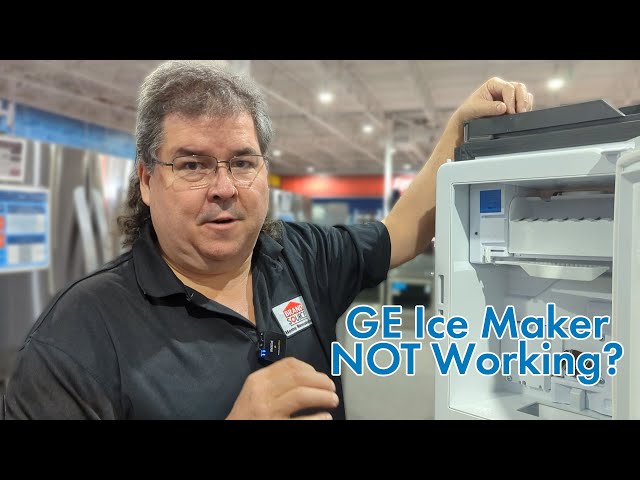
Introduction
Finding your GE refrigerator isn’t making ice can be frustrating, especially during warm weather or when you’re hosting guests. The ice maker is a convenient feature, and when it stops working, it disrupts your daily routine. This guide will help you troubleshoot the most common reasons why your GE refrigerator won’t make ice and guide you through easy steps to get it working again. Addressing this issue quickly can also prevent potential food spoilage if the freezer temperature is affected.
Common Causes of My GE Refrigerator Won’t Make Ice
Here are several common reasons why your GE refrigerator might not be making ice:
- The freezer temperature is too warm: The freezer needs to be at or below 0F (-18C) for the ice maker to function properly.
- The ice maker is turned off: Many GE refrigerators have a switch to turn the ice maker on and off.
- The water supply is blocked: A kinked or frozen water line can prevent water from reaching the ice maker.
- The water filter is clogged: A dirty water filter restricts water flow, impacting ice production.
- The ice maker arm is stuck: Sometimes, the ice maker arm can get stuck in the “up” (off) position.
- Ice buildup in the ice maker: Excessive ice accumulation can prevent the ice maker from working correctly.
- Low water pressure: Insufficient water pressure can hinder the ice-making process.
- Faulty water inlet valve: This valve controls the flow of water to the ice maker. If it’s defective, it won’t allow water to pass.
- Malfunctioning ice maker module: This is the part that controls the ice-making cycle. A faulty module will prevent it from working.
Symptoms Checklist
Here are some indicators that will help you figure out why your GE refrigerator ice maker isn’t working:
- No ice production at all.
- Ice cubes are small or hollow.
- Ice maker is making unusual noises.
- Water is leaking from the ice maker area.
- Freezer temperature is warmer than usual.
- Ice maker arm is stuck in the “up” or “off” position.
How to Fix My GE Refrigerator Won’t Make Ice Step-by-Step Guide
Follow these steps to troubleshoot and fix your GE refrigerator’s ice maker:
- Check the Freezer Temperature: Ensure the freezer is set to 0F (-18C). Use a thermometer to verify. Adjust the temperature if necessary and wait 24 hours.
- Verify the Ice Maker is On: Locate the ice maker switch (usually a wire arm or a button inside the freezer) and make sure it’s in the “on” position.
- Inspect the Water Line: Check the water line behind the refrigerator for any kinks or bends. Straighten the line if necessary.
- Check the Water Filter: Locate the water filter (usually inside the refrigerator compartment or at the base of the fridge). Replace it if it’s been longer than 6 months or if you notice reduced water flow.
- Check Water Pressure: If possible, test the water pressure to your refrigerator. Low water pressure can affect ice production. Generally, it needs at least 20 psi.
- Listen for the Water Inlet Valve: With the ice maker on, listen for a humming sound when the ice maker is supposed to fill. If you don’t hear it, the valve could be faulty.
- Clear Ice Buildup: Manually remove any ice buildup in the ice maker tray or around the ice maker components.
- Reset the Ice Maker: Some GE models have a reset button on the ice maker module. Press and hold the reset button for 35 seconds.
- Check the Ice Maker Arm: Make sure the ice maker arm can move freely. If it’s stuck, gently try to move it down to the “on” position.
- Manually Fill the Ice Maker Tray (Test): Pour a small amount of water into the ice maker tray and wait a few hours. If ice forms, the problem might be with the water supply.
- Check the Door Switch: The ice maker may be disabled when the freezer door is open. Make sure the door switch is functioning properly.
Fix the Issue Without Buying Parts
Here are some things you can try before considering any replacement parts:
- Defrost the Freezer: If there’s excessive ice buildup, unplug the refrigerator and let the freezer defrost completely. This can clear any blockages.
- Clean the Ice Maker: Regularly clean the ice maker and surrounding area with a mild detergent and warm water.
- Check for Air Leaks: Ensure the freezer door seals are clean and tight. Air leaks can cause temperature fluctuations and affect ice production.
- Ensure Proper Ventilation: Avoid overcrowding the freezer with too many items, as this can restrict airflow and affect cooling.
When Replacement Might Be Necessary
If you’ve tried all the troubleshooting steps and your ice maker still isn’t working, you might need to replace a part. Some common parts that fail include:
- Water Inlet Valve: Controls the water flow to the ice maker. Replacement cost: $30$70.
- Water Filter Housing: If cracked or damaged, it can affect water pressure. Replacement cost: $20$50.
- Ice Maker Module: The brain of the ice maker. Replacement cost: $80$150.
Safety Warning
- Always unplug the refrigerator before performing any maintenance or repairs.
- Avoid working on electrical components if you are not comfortable doing so. Seek professional assistance.
- Be careful when handling sharp tools or components.
- Ensure the floor is dry to avoid electric shock.
Tools You May Need
- Screwdrivers (Phillips and flathead)
- Pliers
- Adjustable wrench
- Multimeter (for testing electrical components)
- Thermometer
FAQ
Here are some common questions about GE refrigerator ice makers:
- Q: How long does it take for a new GE refrigerator to make ice? A: It usually takes 2448 hours for a new refrigerator to start making ice.
- Q: My ice maker is making ice, but it’s small and hollow. Why? A: This is usually due to low water pressure or a clogged water filter.
- Q: How often should I replace my GE refrigerator water filter? A: It’s recommended to replace the water filter every 6 months.
- Q: My ice maker is overflowing. What could be the problem? A: The water inlet valve may be faulty, or the ice maker is not leveling properly.
Conclusion
Troubleshooting your GE refrigerator ice maker can seem daunting, but by following these steps, you can often identify and fix the problem yourself. Start with the easy solutions first, like checking the temperature and water supply. If you’ve exhausted all options and the ice maker still isn’t working, it might be time to call a qualified appliance technician. Don’t worry, many of these issues can be resolved without expensive repairs. Good luck!
Youtube Video:
Looking for more useful options?
Check out recommended resources that others find helpful.