Introduction
Hearing a loud humming noise coming from your refrigerator can be annoying, especially when it stops as soon as you open the door. This usually indicates that a component is struggling to operate properly. While not always a critical issue immediately, ignoring this humming can lead to more significant problems down the road, potentially affecting the refrigerator’s cooling performance and shortening its lifespan. This guide will walk you through the common causes and how to troubleshoot them, saving you money and potential food spoilage.
Common Causes of samsung refrigerator making loud humming noise stops when door open
Here are several common reasons why your Samsung refrigerator might be humming loudly and stopping when the door opens:
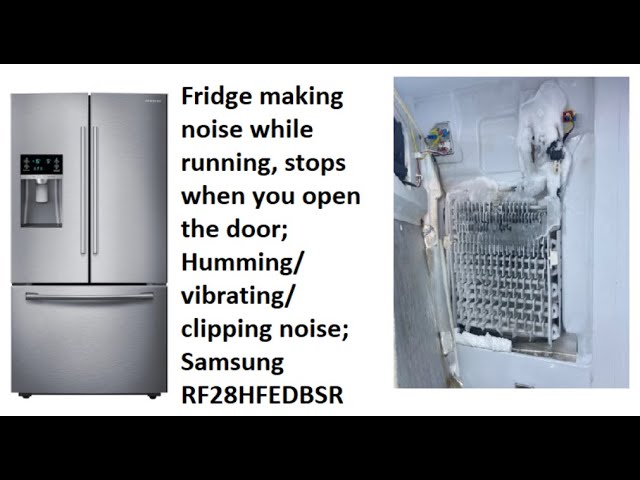
- Evaporator Fan Motor: This fan circulates cold air within the freezer compartment. If it’s obstructed by ice buildup or the motor is failing, it can produce a humming noise that changes when airflow changes due to the door opening.
- Condenser Fan Motor: Located near the compressor at the back of the refrigerator, this fan cools the condenser coils. Dust accumulation or a failing motor can cause it to hum loudly.
- Compressor: The compressor is the heart of the refrigerator, responsible for circulating refrigerant. A failing compressor can produce a loud humming or buzzing sound, especially as it strains to start.
- Defrost System Malfunction: If the defrost system isn’t working properly, ice can build up excessively, causing the fans to struggle and hum.
- Damper Control: This component controls the airflow between the freezer and the refrigerator. A faulty damper can cause temperature imbalances and strain on the cooling system, leading to humming.
- Ice Maker: If the ice maker is struggling to fill with water or is malfunctioning, it can produce humming noises.
- Loose Components: Sometimes, loose screws, panels, or even the refrigerator’s position on the floor can cause vibrations that amplify into a humming sound.
- Start Relay/Overload: These components help start the compressor. A failing relay can cause a humming sound as the compressor struggles to start.
Symptoms Checklist
Use this checklist to help pinpoint the issue:
- Loud humming noise coming from the back or bottom of the refrigerator.
- Humming noise stops immediately when the refrigerator door is opened.
- The refrigerator may feel warmer than usual.
- Ice buildup in the freezer compartment.
- Unusual ice maker operation (e.g., not making ice, ice clumping).
- The back panel inside the freezer may have excessive frost.
How to Fix samsung refrigerator making loud humming noise stops when door open Step-by-Step Guide
- Unplug the Refrigerator: Always start by unplugging the refrigerator from the power outlet for safety.
- Inspect the Evaporator Fan: Open the freezer and locate the back panel. Remove it (usually held by screws). Examine the evaporator fan. Is it blocked by ice? If so, proceed to defrosting.
- Defrost the Refrigerator: Manually defrost the refrigerator by leaving the door open for several hours (with towels underneath to catch water) or using a hairdryer (on a low setting and keeping a safe distance) to melt the ice. Never use sharp objects to remove ice.
- Check the Evaporator Fan Motor: Once defrosted, try spinning the evaporator fan blade by hand. Does it spin freely, or is it stiff? If it’s stiff, the motor may be failing.
- Inspect the Condenser Fan: Locate the condenser fan at the back of the refrigerator (usually near the bottom). Clean any dust or debris from the fan blades and surrounding area.
- Check the Condenser Fan Motor: Try spinning the condenser fan blade by hand. If it’s stiff or doesn’t spin freely, the motor may be failing.
- Listen to the Compressor: Plug the refrigerator back in briefly (only long enough to listen). Is the humming noise coming directly from the compressor? If so, it might indicate a compressor issue. Unplug the refrigerator again.
- Check for Loose Components: Inspect the refrigerator for any loose screws, panels, or brackets. Tighten any that you find.
- Ensure Proper Leveling: Make sure the refrigerator is level. Use a level tool to check and adjust the feet as needed. An unlevel refrigerator can cause vibrations.
- Inspect the Damper Control: Open the refrigerator compartment and locate the damper control (usually at the top). Make sure its not blocked by food items and can open and close freely.
- Ice Maker Check: Turn off the ice maker and observe if the humming stops. If it does, the ice maker itself is likely the source of the noise.
- Reset the Refrigerator: After making these checks, unplug the refrigerator for at least 30 minutes, then plug it back in. This can sometimes reset the electronic components.
Fix the Issue Without Buying Parts
Here are some things you can try that don’t require new parts:
- Complete Defrost: A thorough defrost is often the most effective solution for ice buildup related humming.
- Cleaning: Regularly clean the condenser coils and fan blades to improve airflow and reduce strain on the components.
- Proper Loading: Avoid overpacking the refrigerator, as this can restrict airflow and cause the system to work harder.
- Leveling: Ensure the refrigerator is properly leveled to prevent vibrations.
- Reset: Unplugging the refrigerator for an extended period can sometimes resolve minor electronic glitches.
When Replacement Might Be Necessary
If the humming persists after trying the troubleshooting steps, a failing component might need replacement. Common failing parts include:
- Evaporator Fan Motor: ($50-$150)
- Condenser Fan Motor: ($40-$120)
- Compressor: ($200-$500 + professional installation)
- Start Relay/Overload: ($20-$50)
Consider contacting a qualified appliance repair technician for diagnosis and replacement if you’re not comfortable performing the repairs yourself, especially regarding the compressor.
Safety Warning
- Always unplug the refrigerator before performing any maintenance or repairs.
- Avoid touching electrical components with wet hands.
- Be careful when handling sharp objects during defrosting.
- If you’re unsure about any step, consult a qualified appliance repair technician.
Tools You May Need
- Screwdriver (Phillips and flathead)
- Level
- Vacuum cleaner with brush attachment
- Towels
- Hairdryer (optional, for defrosting)
FAQ
- Q: Why does the humming stop when I open the door? A: Opening the door can temporarily change the airflow, reducing the strain on a failing fan or component. It may also affect the temperature sensor, causing the system to adjust.
- Q: How often should I clean the condenser coils? A: Ideally, clean the condenser coils every 6 months to a year.
- Q: Can a dirty air filter cause humming? A: Samsung refrigerators may have an air filter, although it’s less common. While not directly related to humming, a clogged air filter can impact cooling efficiency, so it’s good practice to check and replace it as recommended.
- Q: Is it safe to use the refrigerator if it’s humming? A: It’s generally safe to use the refrigerator temporarily, but it’s best to address the issue promptly to prevent further damage and potential food spoilage.
Conclusion
Troubleshooting a humming refrigerator can seem daunting, but by following these steps, you can often identify and resolve the problem yourself. Remember to prioritize safety and take your time. If you’re still experiencing issues after attempting these fixes, it’s best to consult a qualified appliance repair technician to avoid further damage.
Youtube Video:
Looking for more useful options?
Check out recommended resources that others find helpful.