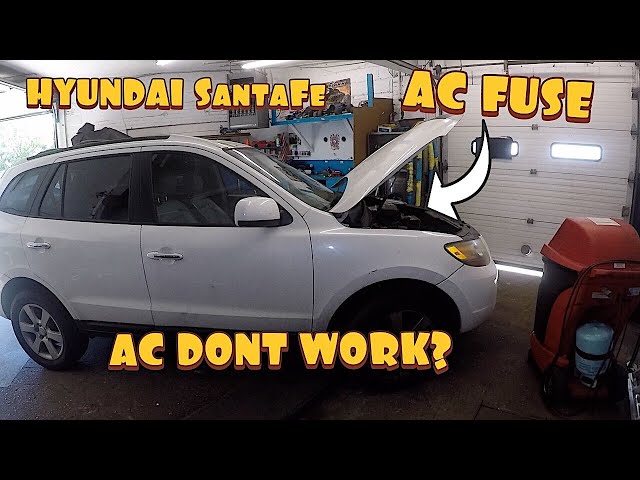
Introduction
Imagine it’s a scorching summer day, and you hop into your Hyundai Santa Fe, ready for a cool and comfortable ride. But instead of a refreshing blast of cold air, you’re greeted with…nothing. An AC that’s not blowing air is a frustrating problem, especially during hot weather. It can range from a minor inconvenience to a serious issue that makes driving unbearable. This guide will walk you through common causes and troubleshooting steps, helping you get your AC back in action. It’s important to address this quickly to ensure comfortable and safe driving conditions, and to prevent potential damage to other components of your vehicle’s system.
Common Causes of Hyundai Santa Fe AC Not Blowing
Several things can cause your Santa Fe’s AC to stop blowing air. Here are some of the most common culprits:
- Blown Fuse: A blown fuse in the AC system can cut power to the blower motor.
- Faulty Blower Motor: The blower motor is responsible for pushing air through the vents. If it fails, no air will flow.
- Blower Motor Resistor: This controls the blower motor’s speed. A faulty resistor can cause the motor to stop working entirely or only work on certain settings.
- Clogged Cabin Air Filter: A dirty cabin air filter restricts airflow, potentially reducing or stopping the AC’s output.
- AC Compressor Issues: While this often results in warm air rather than no air, a completely failed compressor can indirectly prevent the blower from engaging.
- Electrical Problems: Issues with wiring, connectors, or the AC control panel can interrupt the signal to the blower motor.
- Faulty AC Control Module: The control module governs the entire AC system.
- Low Refrigerant: Although more likely to cause warm air, critically low refrigerant can sometimes indirectly disable the blower.
- Blocked Vents or Ducts: Obstructions in the vents or ductwork can prevent air from reaching you.
Symptoms Checklist
Use this checklist to help diagnose the problem:
- No air blowing from any vents, regardless of fan speed setting.
- Air only blows on one or two fan speed settings.
- You hear a clicking or humming sound from behind the dashboard when the AC is turned on.
- The AC light is on, but no air is coming out.
- The AC blows warm air instead of cold air (potentially related, but requires different troubleshooting).
- The engine is overheating.
How to Fix Hyundai Santa Fe AC Not Blowing Step-by-Step Guide
Follow these steps to troubleshoot your AC issue:
- Check the Fuses: Locate the fuse box (usually under the dashboard or in the engine compartment). Consult your owner’s manual to identify the AC and blower motor fuses. Use a fuse tester or visually inspect the fuses for a broken filament. Replace any blown fuses with the correct amperage rating.
- Inspect the Cabin Air Filter: The cabin air filter is typically located behind the glove box. Remove the glove box (refer to your owner’s manual for specific instructions) and inspect the filter. If it’s clogged with dirt and debris, replace it with a new one.
- Check the Blower Motor Resistor: The blower motor resistor is usually located near the blower motor. Visually inspect it for damage or corrosion. A multimeter can be used to test the resistor’s continuity (consult a repair manual for specific testing procedures).
- Listen for the Blower Motor: Turn the ignition on (without starting the engine) and set the AC to the highest fan speed. Listen carefully near the blower motor (usually under the dashboard on the passenger side) for any signs of life (humming, clicking). If you hear nothing, the motor may be faulty.
- Check Blower Motor Wiring: Inspect the wiring harness connected to the blower motor. Make sure the connections are secure and free from corrosion.
- Test Blower Motor Directly (Advanced): Disconnect the blower motor wiring harness. Using jumper wires, connect the blower motor directly to the battery (observe correct polarity). If the motor spins, the issue is likely with the wiring, resistor, or control panel. Caution: Incorrect wiring can damage the motor.
- Check the AC Clutch (if applicable): With the engine running and AC on, observe the AC compressor. The clutch should engage, causing the compressor pulley to spin. If the clutch doesn’t engage, the compressor may be faulty, or there may be an electrical issue.
- Check for Obvious Blockages: Inspect the vents and ductwork for any visible obstructions (leaves, debris, etc.).
- Consult the Owner’s Manual: Refer to your Hyundai Santa Fe owner’s manual for specific information about the AC system and troubleshooting tips.
- Consider a Diagnostic Scan: If you’re still unable to identify the problem, consider having a professional mechanic perform a diagnostic scan of the AC system. This can help pinpoint electrical issues or sensor malfunctions.
Fix the Issue Without Buying Parts
Before rushing to replace parts, try these free methods:
- Reset the AC System: Some vehicles allow you to reset the AC system by disconnecting the battery for a few minutes and then reconnecting it. Consult your owner’s manual for instructions.
- Clean the Cabin Air Filter Housing: Even if you replace the cabin air filter, debris may still be present in the housing. Clean it out with a vacuum cleaner.
- Recalibrate the AC Controls: In some cases, the AC controls may need to be recalibrated. This usually involves a specific sequence of button presses. Refer to your owner’s manual.
- Inspect the Condenser: The AC condenser is located in front of the radiator. Make sure it’s free of debris that could be blocking airflow. (Be careful not to damage the fins.)
When Replacement Might Be Necessary
If the troubleshooting steps don’t resolve the issue, you may need to replace a faulty component. Here are some common replacements and estimated cost ranges (USD):
- Blower Motor: $100 – $300 (including labor)
- Blower Motor Resistor: $50 – $150 (including labor)
- Cabin Air Filter: $20 – $50 (including labor, but often DIY)
- AC Compressor: $500 – $1200 (including labor and refrigerant recharge)
Safety Warning
- Disconnect the battery’s negative terminal before working on any electrical components.
- Avoid working on the AC system if you are not familiar with refrigerant handling procedures. Refrigerant can be harmful if inhaled or released into the environment.
- Wear safety glasses to protect your eyes.
- Work in a well-ventilated area.
- If you are uncomfortable with any of these procedures, consult a qualified mechanic.
Tools You May Need
- Screwdrivers (Phillips and flathead)
- Socket set
- Fuse tester
- Multimeter (optional)
- Pliers
- Work gloves
- Safety glasses
FAQ
- Q: Why is my AC blowing warm air even on the coldest setting? A: This usually indicates a low refrigerant level or a faulty AC compressor.
- Q: How often should I replace my cabin air filter? A: It’s recommended to replace the cabin air filter every 12,000 to 15,000 miles, or more frequently if you drive in dusty conditions.
- Q: Can I recharge my AC system myself? A: While DIY AC recharge kits are available, it’s generally recommended to have a professional recharge the system to ensure proper refrigerant levels and prevent damage.
- Q: My AC works intermittently. What could be the problem? A: This could be due to a loose electrical connection, a failing blower motor resistor, or a problem with the AC control module.
- Q: How can I prevent AC problems in the future? A: Regularly inspect and replace the cabin air filter, have the AC system serviced annually, and avoid running the AC at maximum settings for extended periods.
Conclusion
Troubleshooting a Hyundai Santa Fe AC that’s not blowing air can seem daunting, but by following these steps, you can often identify and fix the problem yourself. Start with the easy solutions like checking the fuses and cabin air filter. If those don’t work, move on to more advanced troubleshooting. Remember to prioritize safety and consult a professional if you’re unsure about any of the procedures. With a little effort, you can get your AC back up and running, ensuring a comfortable and enjoyable driving experience. Before you call a technician, you might be surprised how much you can accomplish yourself.
Youtube Video:
Looking for more useful options?
Check out recommended resources that others find helpful.